The SOP header
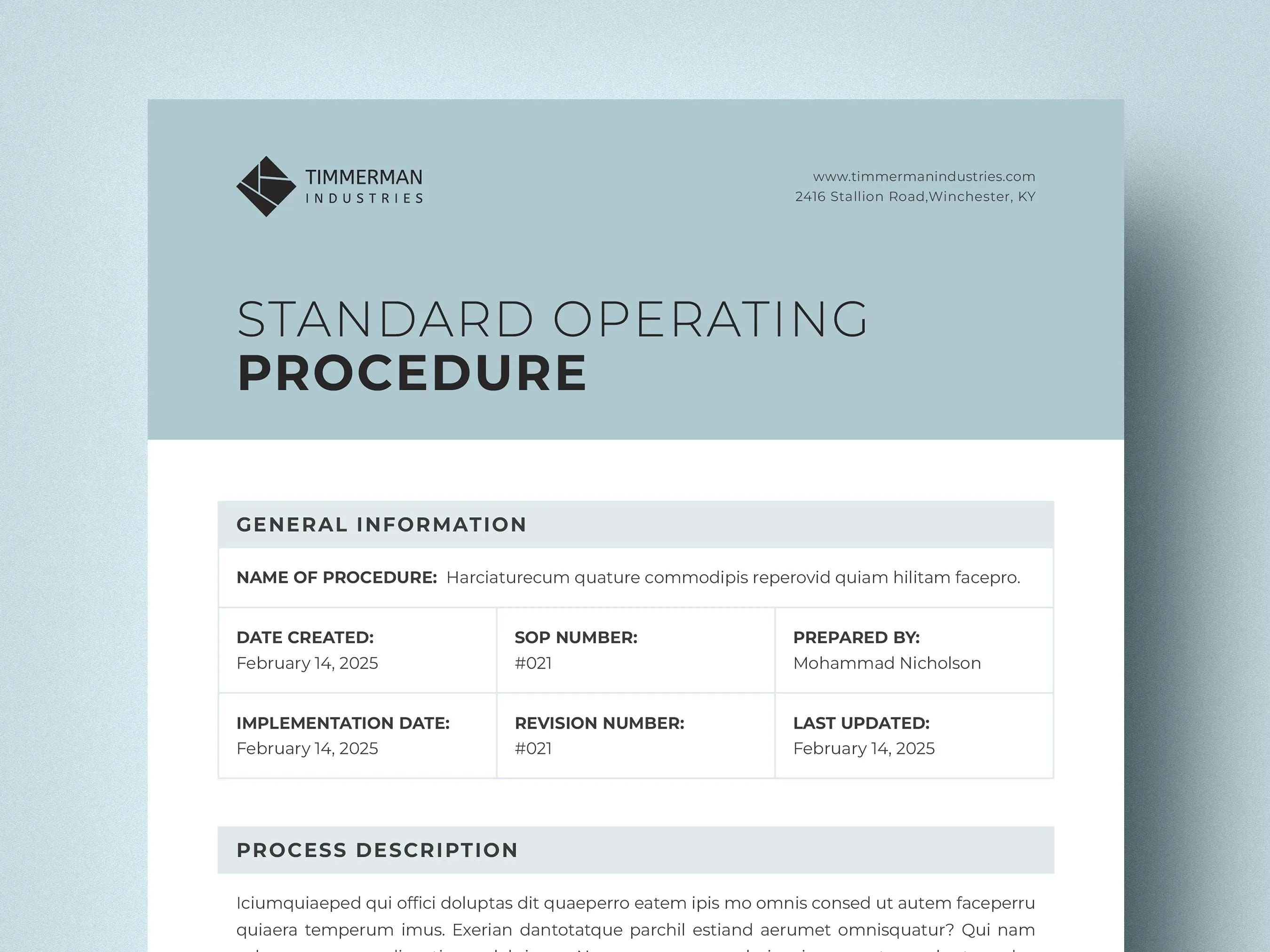
Every SOP opens with a header block, so readers know they have the current version and who to ask.
- 4 Effective
- 1 June 2026
- 5 Owner
- Priya Shah, Operations
- 6 Applies to
- All shift supervisors
- 8 Next review
- 1 December 2026
- 1TitleWhat the procedure is
- 2SOP numberA unique reference
- 3VersionCurrent version number
- 4Effective dateWhen this version applies
- 5OwnerWho keeps it up to date
- 6Applies toWho must follow it
- 7PurposeWhy the procedure exists
- 8Review dateWhen it will next be checked
One procedure, four formats
The same procedure, closing a café till at the end of the day, written in each common SOP format. Choose the format that matches the task.
- 1Print the end-of-day report from the till.
- 2Count the cash in the drawer twice.
- 3Check that the total matches the report.
- 4Put the cash and the report in a bank bag and seal it.
- 5Place the bag in the safe.
- 6Sign and date the cash log.
Instruction language
SOP steps use the imperative: the form of the verb that gives an instruction (“Count”, “Seal”, “Sign”). One action per step keeps the procedure easy to follow and to check.
| Pattern | Example step | Why |
|---|---|---|
| Start with a verb | Count the cash in the drawer twice. | The first word tells the reader what to do. |
| One action per step | Seal the bag. Then place it in the safe. | Each step can be done and checked on its own. |
| Exact quantities | If the total differs by more than £5, recount. | Readers never have to judge what “small” means. |
| Name the item exactly | Use the blue bank bag from the top drawer. | Removes guesswork for new staff. |
| Put warnings before the step | Caution: hot surface. Turn off the oven, then clean the tray. | The reader sees the risk before acting. |
Writing an SOP in five steps
The person who does the task every day knows it best. Write the SOP with them, not for them. The full method is in how to write an SOP.
- 1Watch the taskObserve someone doing it once, noting every step and decision.
- 2Draft the stepsOne action per step, starting with a verb: “Count”, “Record”, “Lock”.
- 3Test with a newcomerAsk someone who has never done it to follow the draft. Note where they hesitate.
- 4Fix and approveRewrite the unclear steps; the owner signs off the version.
- 5Train and fileWalk the team through it and store it where they will look for it.
Who is responsible: a RACI line
Some SOPs add a short table showing who does what. RACI stands for Responsible (does it), Accountable (signs it off), Consulted (asked first) and Informed (told afterwards).
| Step | Responsible | Accountable | Consulted | Informed |
|---|---|---|---|---|
| Count the till | Shift supervisor | Café manager | None | None |
| Record discrepancies over £5 | Shift supervisor | Café manager | Operations | Finance |
| Bank the takings | Café manager | Operations lead | None | Finance |
Version control
A change log at the end of the SOP records every revision, so staff can see what changed and auditors can see when.
| Version | Date | Change | Approved by |
|---|---|---|---|
| 3.1 | 1 June 2026 | Added the £5 tolerance for cash differences | Priya Shah |
| 3.0 | 10 January 2026 | Moved to sealed bank bags; removed envelope step | Maria Lopez |
| 2.0 | 4 March 2025 | First version for all six cafés | Maria Lopez |
Guides on SOPs
3 guides · newest first