Phrases for the working week
Set phrases native speakers use at work. Choose a situation to see six of them with what each one does.
Precise words for vague ones
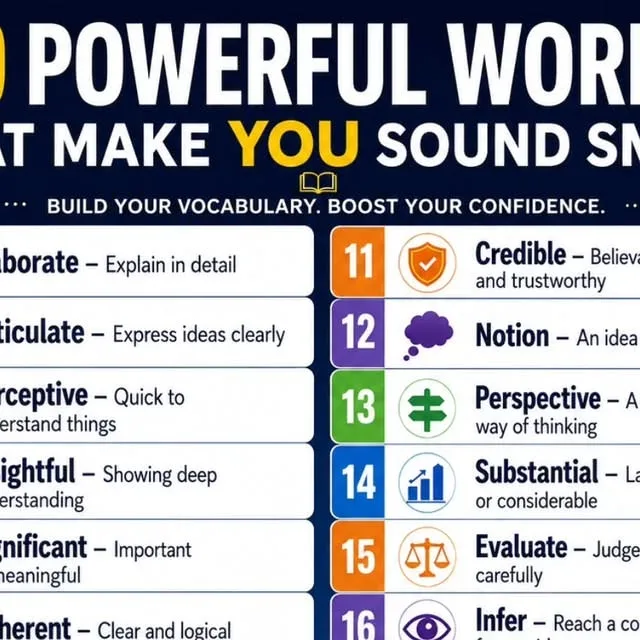
Intensifiers like very and really often stand in for a stronger single word. Pick the replacement that matches your meaning.
| Instead of | Try | In a sentence |
|---|---|---|
| very important | essential, critical | Accurate data is essential for this forecast. |
| very big | substantial, major | We saw a substantial rise in orders. |
| really good | excellent, outstanding | The team delivered outstanding results. |
| very clear | explicit, unambiguous | The contract is explicit about payment terms. |
| get | receive, obtain | We received your application on Monday. |
| look at | review, examine | I’ll review the figures this afternoon. |
| a lot of | considerable, extensive | The project required considerable effort. |
| nice | helpful, considerate | Thank you for such a helpful reply. |
Verbs that go with business nouns
A collocation is a pair of words that native speakers habitually use together. You hold a meeting and meet a deadline; other verbs sound unnatural even when the meaning is clear.
Business terms and abbreviations, decoded
Terms you will meet in reports and emails, with when each one is safe to use. Spell out abbreviations the first time for readers outside your team.
| Term | Means | In a sentence | Use |
|---|---|---|---|
| KPI | key performance indicator: a measure of success | Customer response time is our main KPI. | Spell out first |
| ROI | return on investment | The campaign delivered a strong ROI. | Spell out first |
| stakeholder | anyone affected by or involved in a project | We’ll update all stakeholders on Friday. | Anywhere |
| deliverable | a specific thing a project must produce | The first deliverable is the draft report. | Anywhere |
| Q1 to Q4 | the four quarters of the (financial) year | Sales rose in Q3. | Anywhere |
| EOD | end of the working day | Could you send it by EOD? | Internal |
| FYI | for your information | FYI, the office closes early on Friday. | Internal |
| ASAP | as soon as possible | Please reply ASAP. | Internal |
| bandwidth | time and capacity to take on work | I don’t have the bandwidth this week. | Internal |
| action point | a task agreed in a meeting | Each action point has an owner and a date. | Anywhere |
Phrasal verbs at work
A phrasal verb is a verb plus a small word such as up, off or through, with its own meaning. English speakers use them constantly at work, even in formal emails. Each has a more formal single-word equivalent for reports.
| Phrasal verb | Meaning | In a sentence | Formal equivalent |
|---|---|---|---|
| follow up | check on or continue something | I’ll follow up with the client tomorrow. | pursue |
| set up | arrange or organise | Can you set up a call for Monday? | arrange |
| put off | delay | We’ve put off the launch until June. | postpone |
| go over | check or review | Let’s go over the figures together. | review |
| carry out | do a task or study | The team carried out a survey. | conduct |
Building your vocabulary
Learn new words in phrases, not alone, and use each one in your own writing within a day. The business English phrases guide has more to learn.
- 1CollectNote useful phrases from emails and reports you receive.
- 2GroupSort them by situation: meetings, requests, updates.
- 3UsePut one new phrase in an email the same day.
- 4ReviewLook back at your list once a week and drop what you already use.
Guides on vocabulary
4 guides · newest first