LangLibra.
Browse
About
Grammar guide · How sentences are built

Sentence structure

In sentence structure, every sentence is built from clauses: a subject plus a verb. How you join them decides whether a sentence reads as one clear thought or a tangle. Learn the four sentence types and a few joining rules and you can write long sentences that stay easy to follow.

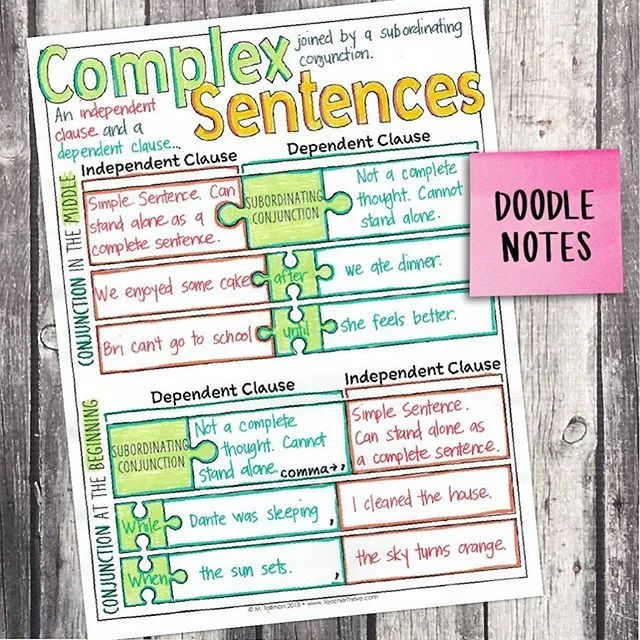
ANATOMY OF A COMPLEX SENTENCE Because the data arrived late, we moved the review to Friday. dependent clause can’t stand alone main clause a full sentence on its own Each clause has a subject and a verb: the data arrived · we moved
The comma after “late” is there because the dependent clause comes first. Put it second (“We moved the review because…”) and the comma goes.

The four sentence types

One idea grows into four shapes. A main clause can stand alone as a sentence; a dependent clause starts with a word like because, when or although and needs a main clause to lean on.

Simple one main clause The data arrived late.
Compound main + main, joined by and, but, so The data arrived late, so we moved the review.
Complex main + dependent Because the data arrived late, we moved the review.
Compound-complex two main + at least one dependent Because the data arrived late, we moved the review, and Sam booked a new room.
main clausedependent clause

The five basic clause patterns

Every English clause follows one of five patterns. The subject is who or what the clause is about; the object receives the action; a complement describes the subject or object.

Subject + verbthe action needs nothing after it The meetingsubjectended.verb
Subject + verb + objectthe most common pattern Priyasubjectsentverbthe report.object
Subject + verb + complementwith be, seem, become The reportsubjectisverbready.complement
Subject + verb + two objectsgive, send, show someone something Priyasubjectsentverbthe clientobjectthe report.object
Subject + verb + object + complementcall, make, find something … The boardsubjectmadeverbLenaobjectdirector.complement

Joining words: equal or dependent?

A coordinating conjunction joins two clauses of equal weight (a compound sentence). A subordinating conjunction makes one clause depend on the other (a complex sentence).

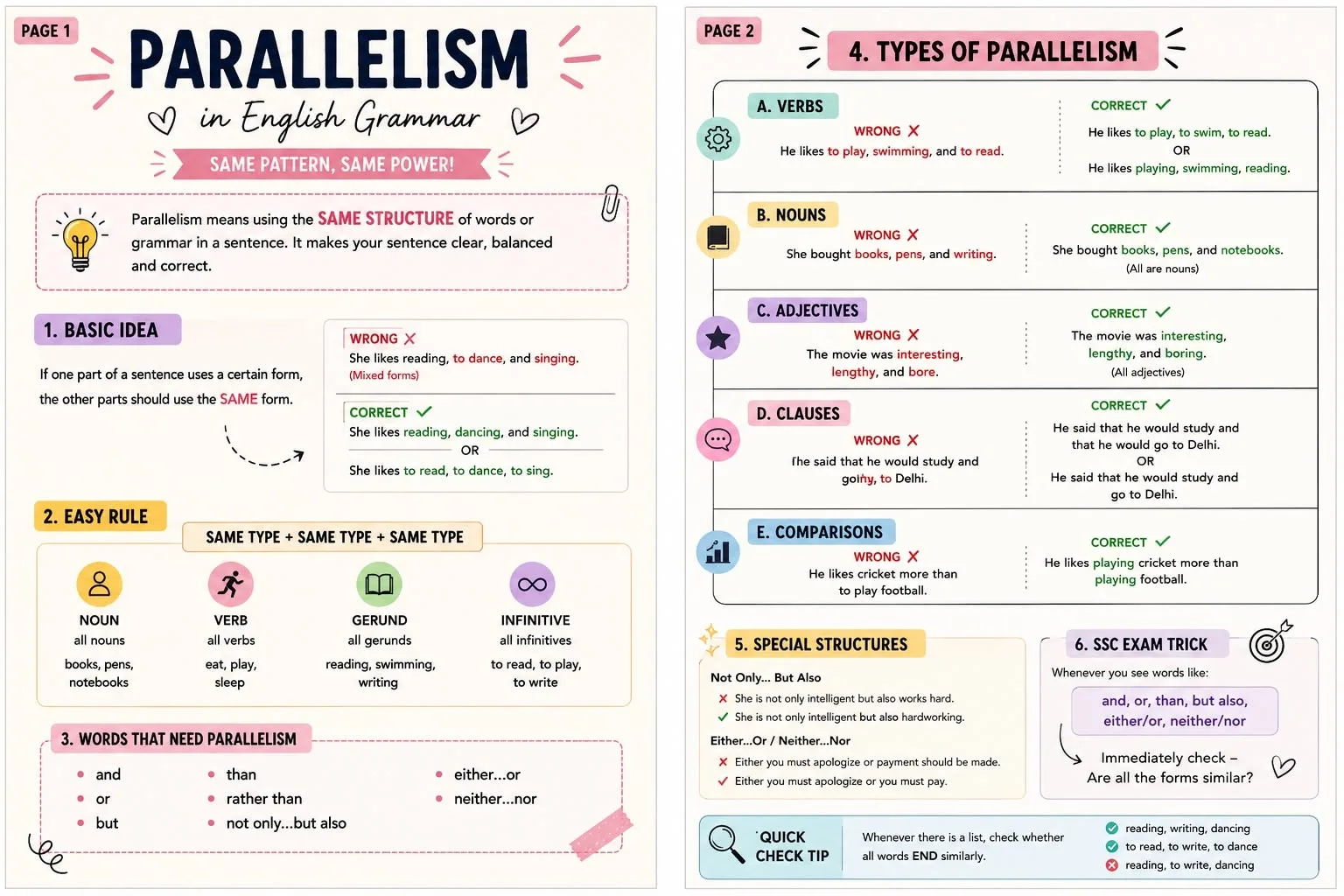
Coordinating: the seven for, and, nor, but, or, yet, so. Remember them as FANBOYS. Put a comma before them when they join two full sentences. forandnorbutoryetso The plan is ready, but the budget isn’t.
Subordinating: grouped by meaning
Timewhen, while, before, after, until, as soon asReasonbecause, since, asContrastalthough, though, even though, whereasConditionif, unless, provided thatPurposeso that, in order that
Although the plan is ready, the budget isn’t.

Vary the length

Readers follow a paragraph more easily when sentence lengths vary. Aim for an average of about 15 to 20 words, with short sentences for key points and longer ones for explanation.

Our first pilot ran for three months across two regional offices and forty staff. 14 words
Response times improved in both offices, and staff reported fewer repeat queries from customers. 14 words
It worked. 2 words
We now propose a full rollout in the second quarter, starting with the three largest teams. 16 words
The short third sentence lands the key point; the longer ones carry the detail around it.

Combining short sentences

A run of short sentences reads as choppy. Combining them shows how the ideas relate. Here is one set of facts joined four ways.

The supplier missed the deadline. Our launch moved to June. Sales are waiting for the new date.
Compoundtwo main clauses with so The supplier missed the deadline, so our launch moved to June.
Complexa because-clause Our launch moved to June because the supplier missed the deadline.
Relative clausewho, which or that adds detail The supplier, which missed the deadline, has pushed our launch to June.
Compound-complexall three facts in one sentence Because the supplier missed the deadline, our launch moved to June, and sales are waiting for the new date.

Five rules for clear sentences

Lead with who does whatUse the active voice by default: subject, verb, object. Choose the passive when the doer is unknown or beside the point.Active vs passive voice → The team approved the budget. · The budget was approved in March.
Join full sentences properlyTwo main clauses need a full stop, a semicolon, or a comma plus and, but or so between them. A comma alone isn’t enough.Joining clauses → The meeting ran late. We missed the train. · The meeting ran late, so we missed the train.
Keep lists parallelItems in a list or comparison take the same grammatical form: all verbs in -ing, all nouns, all full clauses.Parallel structure → The role involves planning budgets, managing suppliers and reporting results.
Put the doer right after an opening phraseAn opening phrase like “Walking to the office” describes whoever comes next, so name that person straight after the comma.Placing modifiers → Walking to the office, I got caught in the rain.
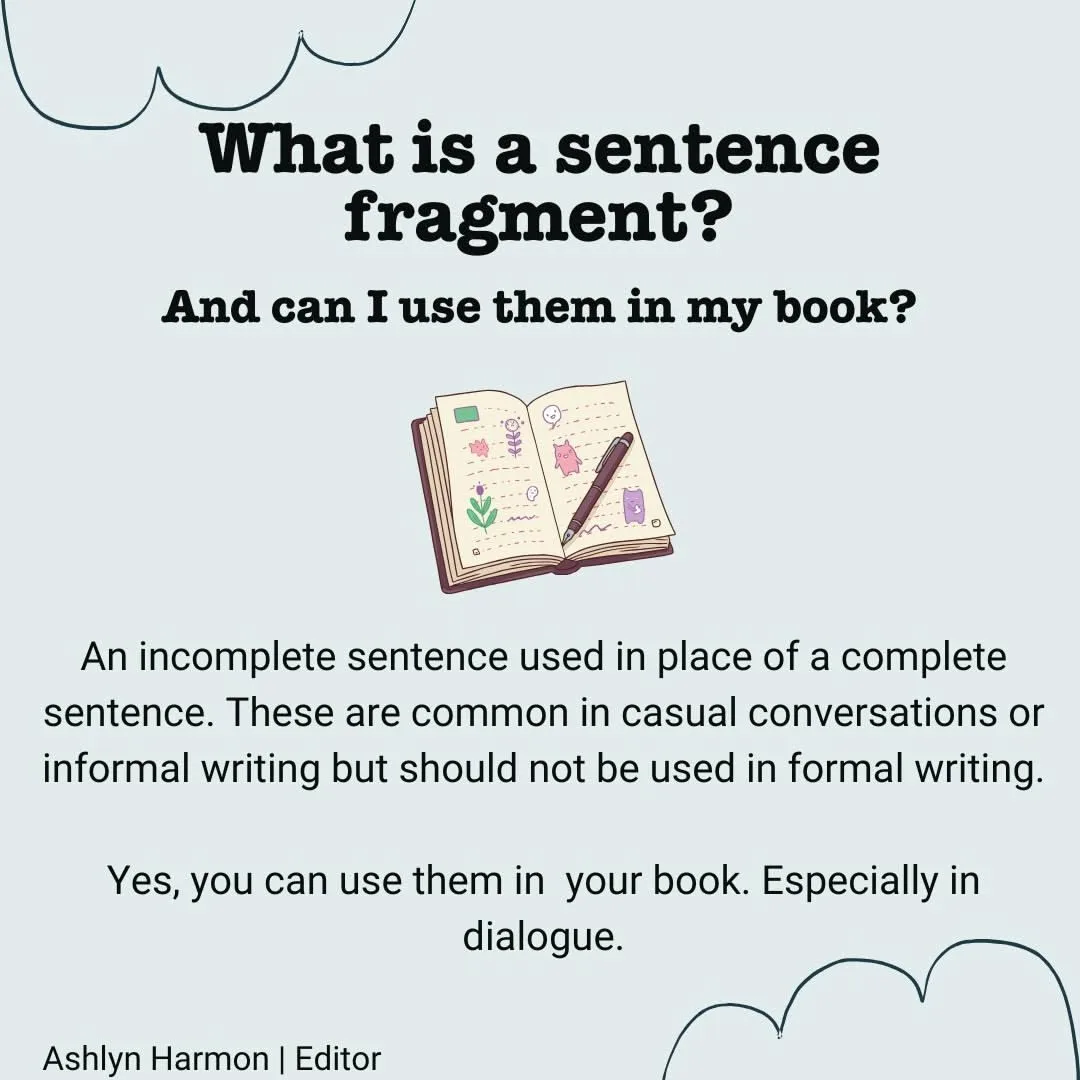
Use fragments on purposeA deliberate fragment adds emphasis in ads, speeches and informal writing. In reports and formal emails, write full sentences.Sentence fragments → We cut the report to two pages. Shorter, clearer, faster to read.

Guides on sentence structure

8 guides · newest first
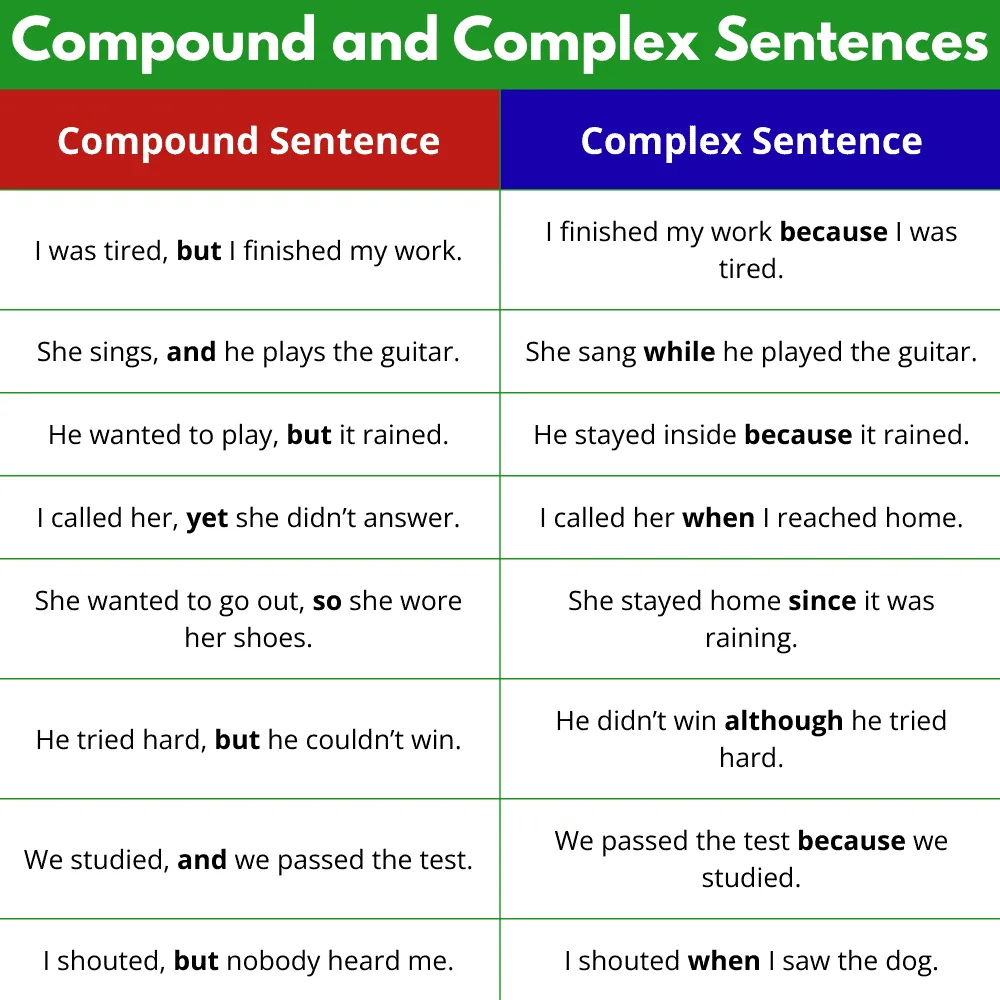
Complex vs Compound Sentences Explained
Complex vs Compound Sentences ExplainedThe difference between compound and complex sentences explained with examples, punctuation rules, and when to use each for clearer, stronger writing.Apr 23, 2026 · 13 min read
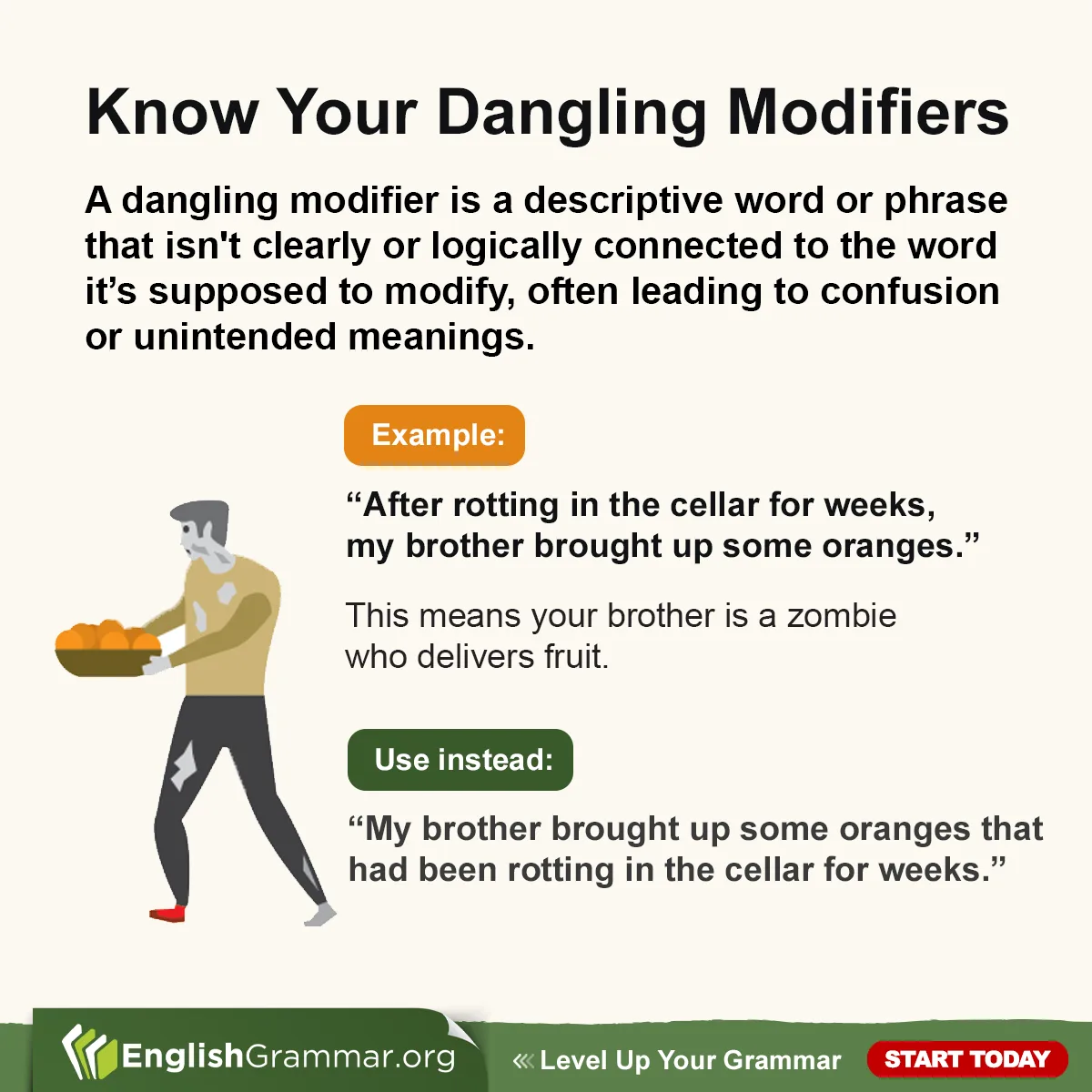
Dangling Modifiers: Spotting and Fixing Them Easily
Dangling Modifiers: Spotting and Fixing Them EasilyLearn how to spot and fix dangling modifiers with 20+ before-and-after examples, patterns table, and a self-check exercise for careful writers.Apr 8, 2026 · 13 min read
Guide to Writing Complex Sentences with Examples
Guide to Writing Complex Sentences with ExamplesLearn to write complex and compound sentences with clear rules, examples, and practice exercises. Vary sentence structure for stronger, more expressive writing.Apr 8, 2026 · 12 min read
Parallel Structure: Grammar Guide with Examples
Parallel Structure: Grammar Guide with ExamplesMaster parallel structure with before-and-after fixes, 20+ examples, rules for lists, comparisons, and correlative conjunctions. A complete ESL reference.Apr 8, 2026 · 8 min read
Sentence Fragments: Understanding Their Usefulness
Sentence Fragments: Understanding Their UsefulnessComplete guide to sentence fragments with four structural categories, register sensitivity, rhythmic effects, and how professional writers use fragments deliberately.Apr 8, 2026 · 12 min read
Active vs Passive Voice: Examples and Rules Explained
Active vs Passive Voice: Examples and Rules ExplainedMaster active and passive voice with clear rules, examples, and conversion techniques. Learn when each voice works best in business, academic, and everyday writing.Mar 27, 2026 · 25 min read
Affect vs Effect: The Definitive Guide for Clarity
Affect vs Effect: The Definitive Guide for ClarityMaster affect vs effect with clear rules, 20+ examples, mnemonic devices, exceptions explained, a self-assessment quiz, and etymology of both words.Mar 26, 2026 · 15 min read
Run-On Sentences - How to Identify and Fix Them
Run-On Sentences - How to Identify and Fix ThemLearn to identify and fix run-on sentences with 4 proven methods. Covers fused sentences, comma splices, and practical exercises for cleaner, clearer writing.Mar 26, 2026 · 16 min read