The full comparison table
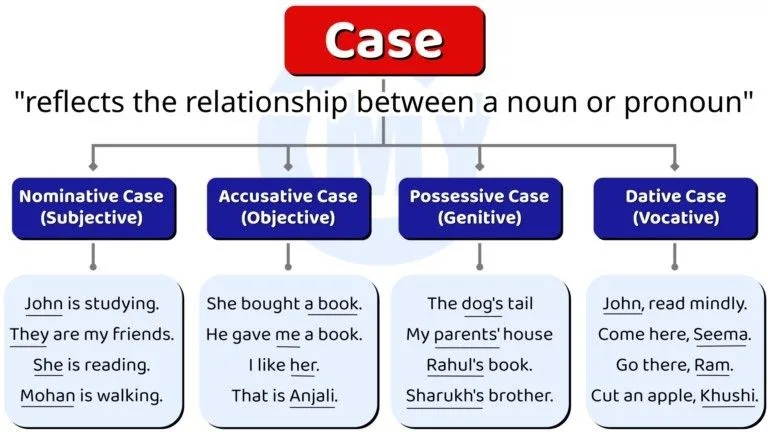
A grammatical case is a change to a word’s ending that shows its job in the sentence (subject, object and so on). Grammatical gender is the class a noun belongs to, which other words must agree with.
| Language | Script | Cases | Genders | Tones | Hello | Guide |
|---|---|---|---|---|---|---|
| Spanish | Latin, 27 letters | None | 2 | None | HolaOH-lah | Spanish grammar |
| French | Latin, 26 letters + accents | None | 2 | None | Bonjourbon-ZHOOR | French grammar |
| German | Latin, 30 letters | 4 | 3 | None | HalloHAH-loh | German grammar |
| Swahili | Latin, 24 letters | None | None | None | JamboJAHM-boh | Swahili grammar |
| Russian | Cyrillic, 33 letters | 6 | 3 | None | Приветpree-VYET | Russian grammar |
| Ukrainian | Cyrillic, 33 letters | 7 | 3 | None | Привітpree-VEET | Ukrainian grammar |
| Bengali | Bengali script, about 50 letters | None | None | None | নমস্কারno-mosh-KAR | Bengali grammar |
| Urdu | Perso-Arabic, 39 letters, right to left | None | 2 | None | السلام علیکمas-sa-LAAM a-LAI-kum | Urdu grammar |
| Yoruba | Latin, 25 letters + tone marks | None | None | 3 | Ẹ n lẹeh-n-LEH | Yoruba grammar |
| Arabic | Arabic, 28 letters, right to left | 3 | 2 | None | مرحباMAR-ha-ban | Arabic grammar |
| Chinese (Mandarin) | Characters, about 3,500 in daily use | None | None | 4 | 你好nee HOW | Chinese (Mandarin) grammar |
| Japanese | Kana and kanji, about 2,100 kanji in daily use | None | None | None | こんにちはkon-NEE-chee-wah | Japanese grammar |
Word order: where the verb goes
Every sentence has a subject (who does the action), a verb (the action) and often an object (what the action is done to). English puts them in the order subject, verb, object: I read a book. Linguists shorten this to SVO. Languages differ in which order is normal, and that one fact changes how a sentence feels to build.
| Language | Usual order | How free is it? | Why |
|---|---|---|---|
| Spanish | SVO | Fairly free | Verb endings show the subject, so “I” is usually dropped: leo un libro = read-I a book. |
| French | SVO | Fixed | Object pronouns jump before the verb: je le lis = I it read. |
| German | Verb second | Fixed rules | The verb is always the second element of a main clause and moves to the end in a clause starting “that”, “because” and similar. |
| Russian, Ukrainian | SVO | Very free | Case endings show who does what, so word order is used for emphasis instead: the new information comes last. |
| Japanese | SOV | Free before the verb | Small particles after each word (wa, o, ni) mark its job; only the verb must stay at the end. |
| Bengali, Urdu | SOV | Fairly free | Postpositions (words placed after a noun, the reverse of English prepositions) mark the roles. |
| Arabic | VSO / SVO | Fairly free | Written Arabic prefers the verb first; case endings in formal Arabic allow reordering. |
| Mandarin, Swahili, Yoruba | SVO | Fixed | Words do not change their endings, so position is what shows who does what. |
One sentence, five languages
Here is the same short sentence, I see the cat, in five languages. Under each word is its pronunciation and its meaning. The note below each one shows the feature that English speakers notice first.
Russian has no word for “the” or “a”. Кошка (cat) changes to кошку because it is the object: this accusative case ending, not word order, shows what is being seen.
The ending -o on veo already means “I”, so no separate pronoun is needed. Spanish puts a little “a” before a person, or a specific animal you know, when it is the object: a + el combine to al.
Japanese usually leaves out “I” when it is obvious. The particle を (o) marks the object, and the verb comes last. ます (masu) makes the verb polite.
Arabic is written right to left. The verb comes first and its prefix a- means “I”; al- is “the”, joined directly to the noun.
No word changes form, there are no articles, and English word order works. The marks over the vowels show the tones: the pitch pattern that is part of each word.
Formal and informal “you”
English has one word for “you”. Most other languages have at least two: an informal one for friends, family and children, and a formal one for strangers, older people and work. Choosing the right one is part of speaking politely, so learners meet it in the first lesson.
| Language | Informal | Formal | Note |
|---|---|---|---|
| Spanish | tútoo | ustedoo-STEHD | Usted takes the same verb form as “he / she”. |
| French | tutü | vousvoo | Vous is also the plural “you”. |
| German | dudoo | Siezee | Sie is always written with a capital S. |
| Russian | тыty | выvy | Switching from вы to ты marks a friendship. |
| Mandarin | 你nǐ (nee) | 您nín (neen) | Formal 您 adds the character for “heart” under 你. |
| Yoruba | ooh | ẹeh | Ẹ is used for elders and anyone you respect. |
| Bengali | tumiTOO-mee | apniAHP-nee | A third, intimate form, tui, is for very close friends. |
| Urdu | tumtoom | aapaahp | Also an intimate tu; aap is the safe default. |
| Japanese | anata (rarely used)ah-NAH-tah | name + sanSAHN | Japanese avoids “you” and uses the person’s name with a polite title. |
What makes a language hard for English speakers
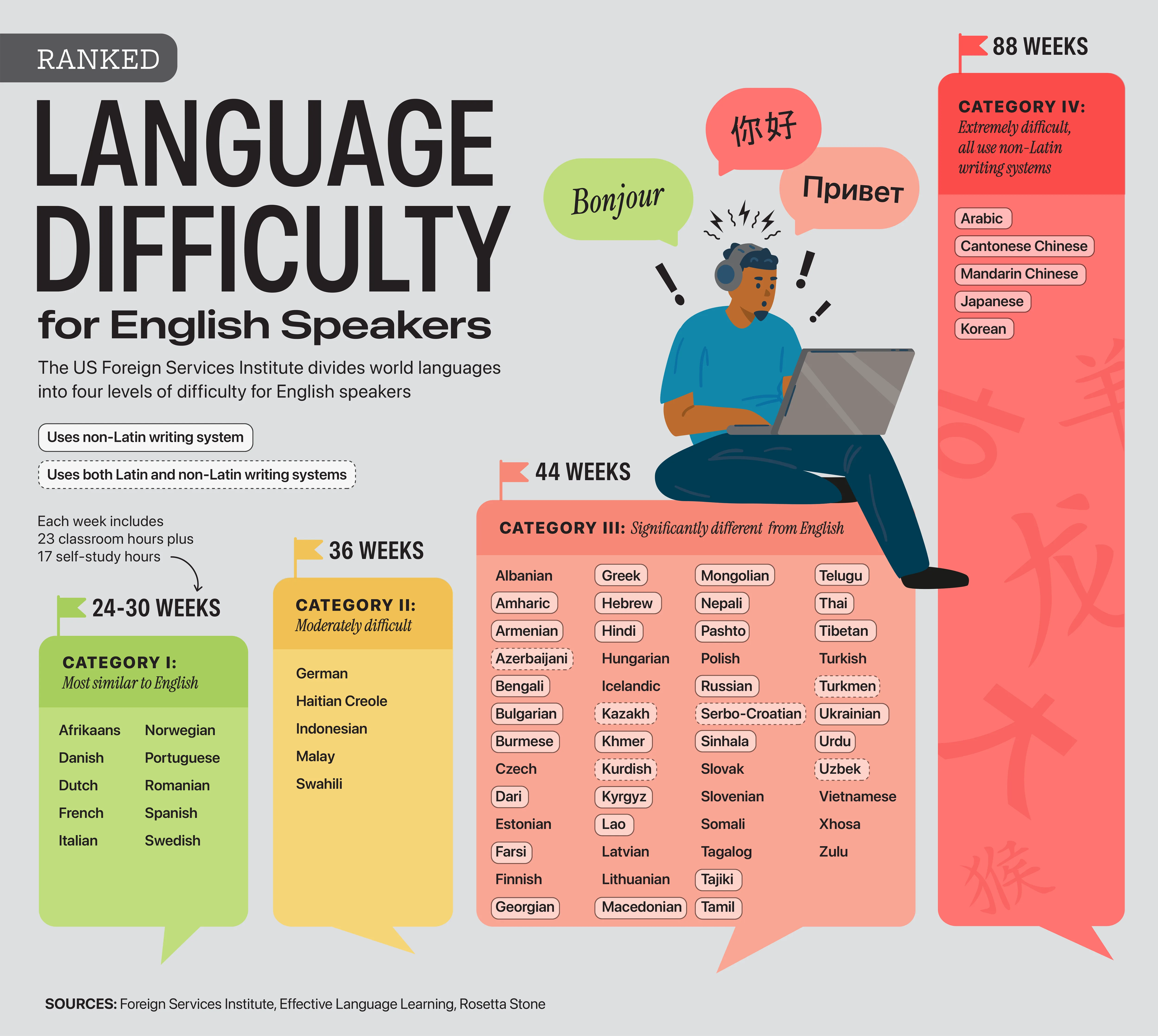
Difficulty is not one thing. Five separate distances add up to the learning times in the chart above. A language can be close on one and far on another: Swahili has a familiar alphabet and easy sounds but an unfamiliar grammar of noun classes.
How to choose a language to learn
The best language to learn is the one you will keep using. Work through these steps in order.
- 1 Start from the reason Family, a partner, work, travel or a culture you love. The reason decides the language.
- 2 Check the learning time Use the chart above to set realistic expectations: Spanish and French come quickest from English.
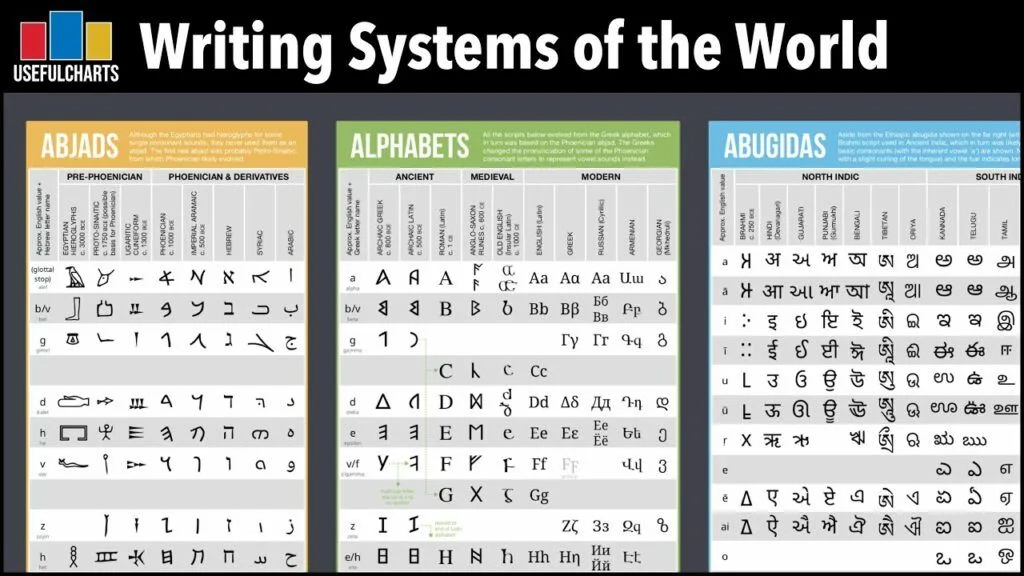
- 3 Look at the script If the alphabet is new, plan your first two weeks around reading it.
- 4 Find what you will read and watch Music, films and news in the language keep you going long after the first lessons.
- 5 Commit to daily practice Twenty minutes every day beats three hours once a week.
Guides on language comparisons
5 guides · newest first