All 12 tenses in one grid
English has three times (past, present, future) and four aspects, which describe how the action unfolds: simple (a plain fact), continuous (in progress), perfect (complete before a point) and perfect continuous (in progress up to a point). Three times four makes twelve.
| Past | Present | Future | |
|---|---|---|---|
| Simplea plain fact or habit | I worked.finished past action | I work.habits, facts | I will work.a future fact or decision |
| Continuousbe + -ing | I was working.in progress at a past moment | I am working.happening now | I will be working.in progress at a future moment |
| Perfecthave + past participle | I had worked.done before another past event | I have worked.past action, present result | I will have worked.done before a future point |
| Perfect continuoushave been + -ing | I had been working.ongoing up to a past moment | I have been working.started in the past, still going | I will have been working.ongoing up to a future point |
The four conditionals
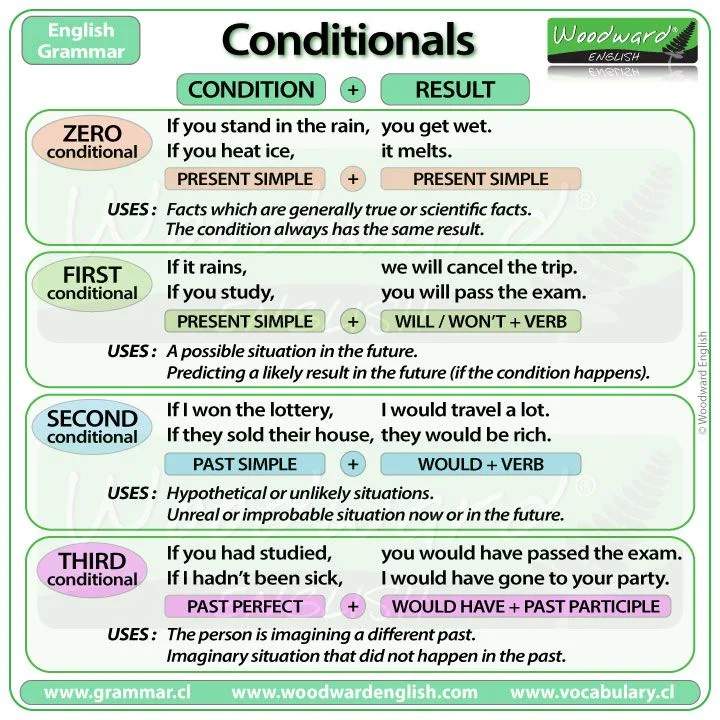
A conditional is an if-sentence. Its type depends on how real the situation is, and each type pairs a fixed tense in the if-clause with a fixed form in the result.
A, an, the or nothing: three questions
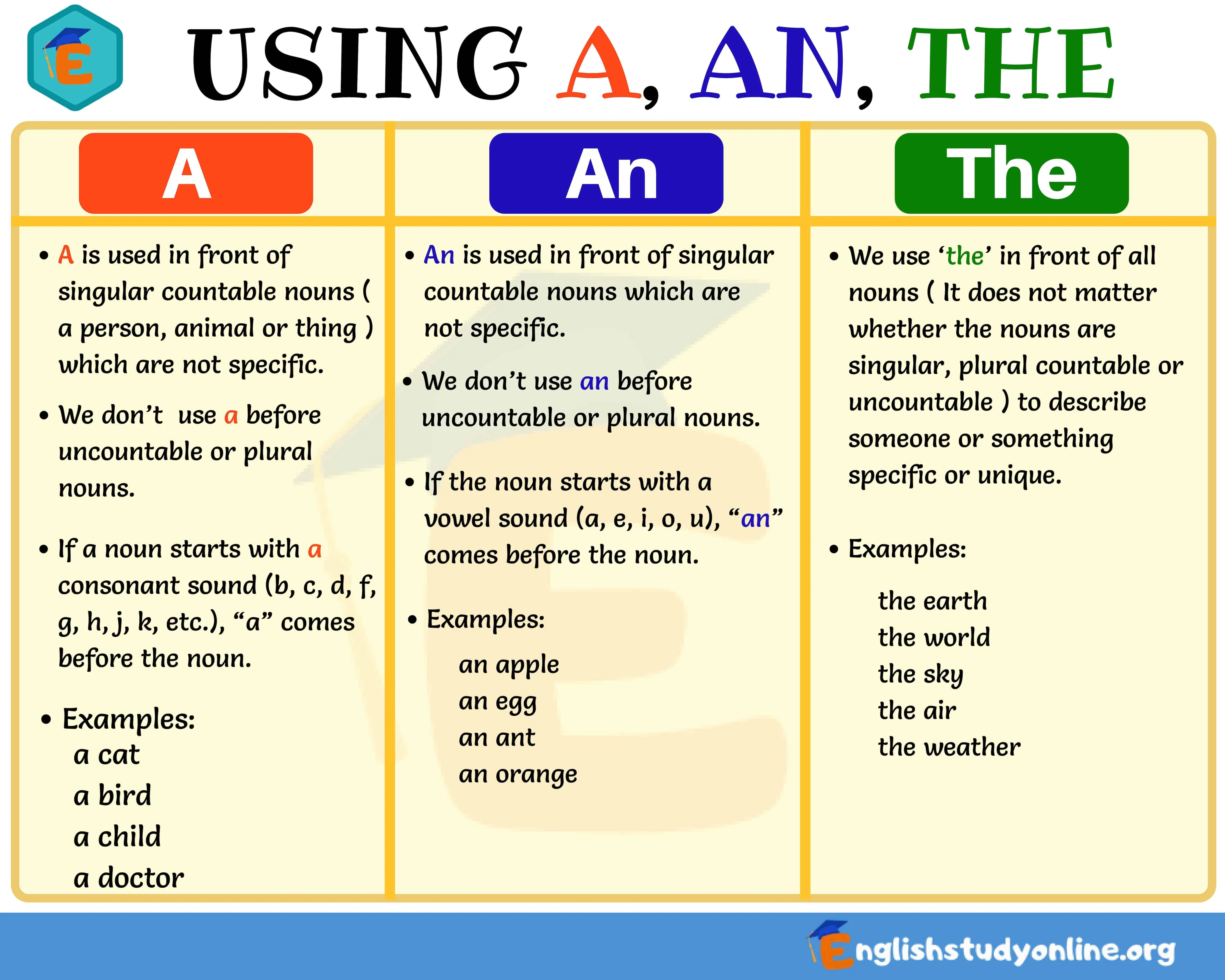
English articles are the small words before a noun that show whether the reader knows which one you mean. A countable noun can be counted (one report, two reports); an uncountable one can’t (information, advice).
- Question 1 Does the reader know which one? Yes, because you mentioned it, there is only one, or the context makes it clear: use the. Please send me the report from Monday.
- Question 2 If not, is it one countable thing? Yes: use a or an. It means “one of many”. We need a new supplier.
- Question 3 Plural or uncountable, in general? Use no article when you mean things or stuff in general. Suppliers want clear information.
Modal verbs by meaning
Modal verbs (can, must, should…) add meaning like ability, permission or obligation to the main verb. They never change form and are always followed by the plain verb with no -s or to: she can go, he must sign.
| Meaning | Modals, strongest first | Example |
|---|---|---|
| Obligation | must · have to · should · ought to | You must sign the form. You should check it first. |
| Permission | can · could · may | May I join the call? You can use this room. |
| Ability | can · could · be able to | She can speak three languages. |
| Possibility | will · must · should · may · might · could | The parcel might arrive today. |
| Polite requests | could · would · can | Could you send me the file? |
| Advice | should · ought to · could | You could ask finance for the figures. |
Reported speech
Reported speech tells someone what another person said, without quoting their exact words. The verb usually moves one step back in time, and words like “today” and “here” change too. More in the reported speech rules.
| Direct speech | Reported speech | What changed |
|---|---|---|
| “I am busy.” | She said she was busy. | am → was |
| “We have finished.” | They said they had finished. | have finished → had finished |
| “I will call you.” | He said he would call me. | will → would; you → me |
| “The meeting is today.” | She said the meeting was that day. | today → that day |
Word order in questions
Most English questions put a helping verb (do, be, have, can, will) before the subject. If there is no helping verb, add do, does or did.
| Statement | Question | Rule |
|---|---|---|
| You work on Fridays. | Do you work on Fridays? | No helping verb, so add do |
| She is in the office. | Is she in the office? | Swap be and the subject |
| They have sent it. | Have they sent it? | Swap have and the subject |
| He can join us. | Where can he join us? | Question word first, then the helping verb |
In indirect questions the word order goes back to a statement: “Can you tell me where the station is?”, not “where is the station”.
Subject-verb agreement with tricky subjects
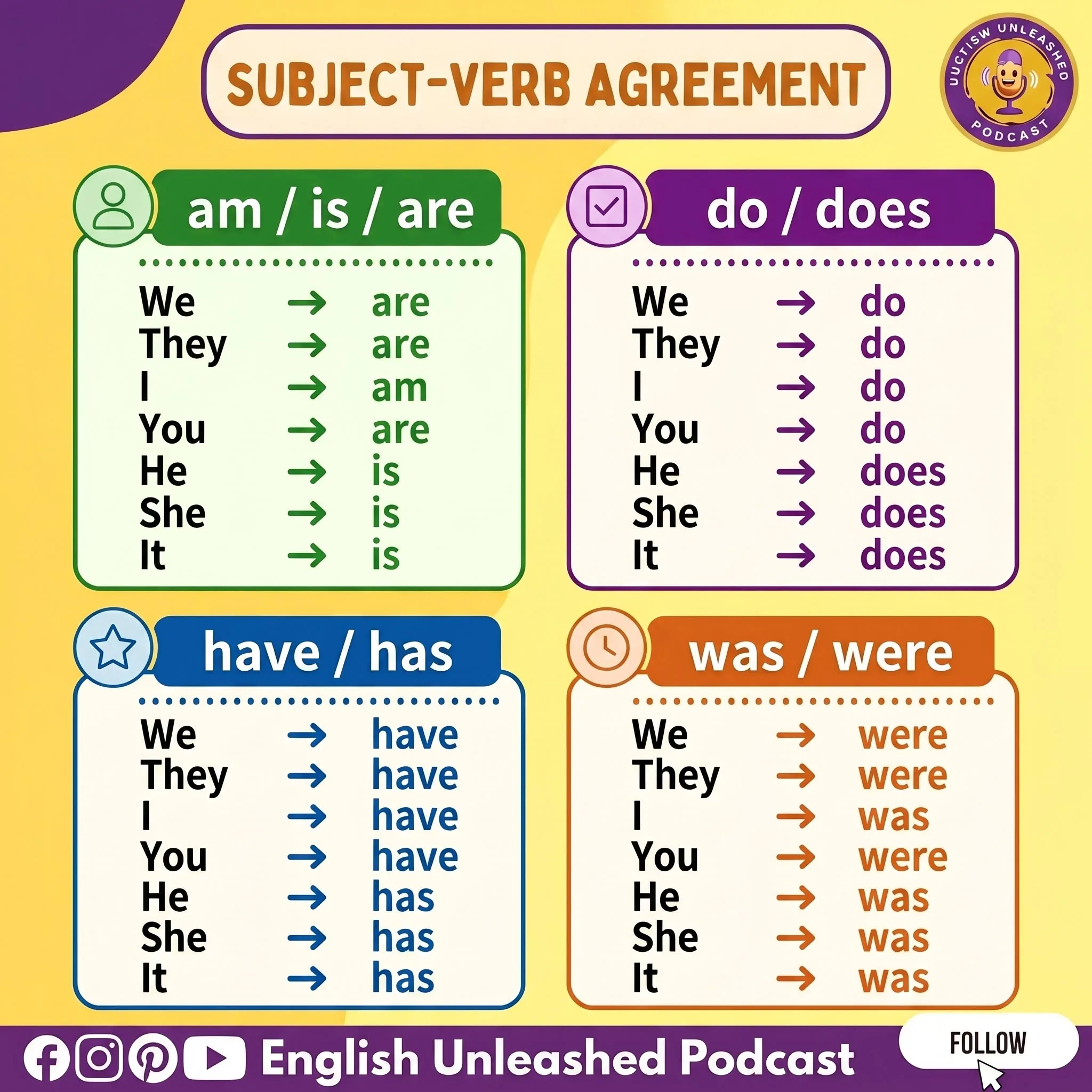
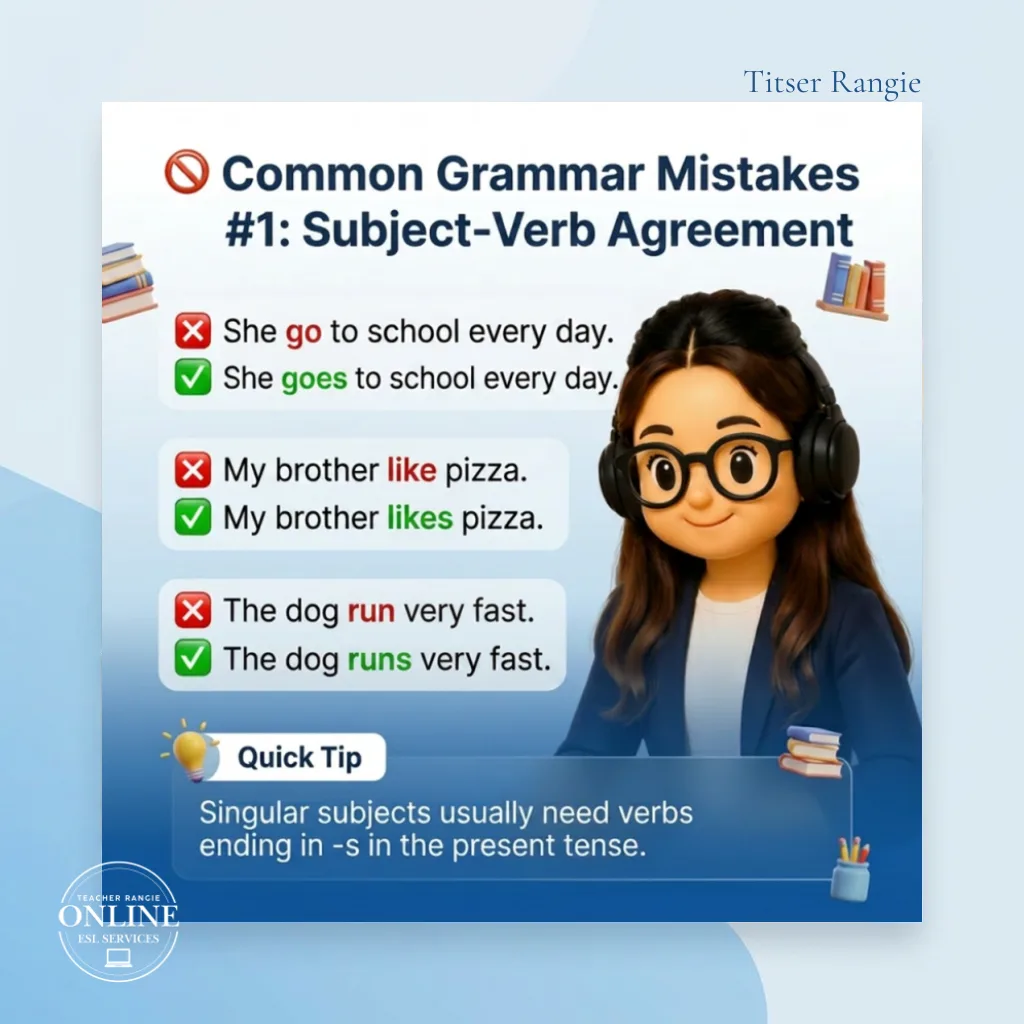
The verb matches its subject in number: singular subject, singular verb. These subjects are the ones that need a second look.
Guides on grammar rules
9 guides · newest first