LangLibra.
Browse
About
العربية · al-ʿarabiyya

Arabic grammar for English speakers

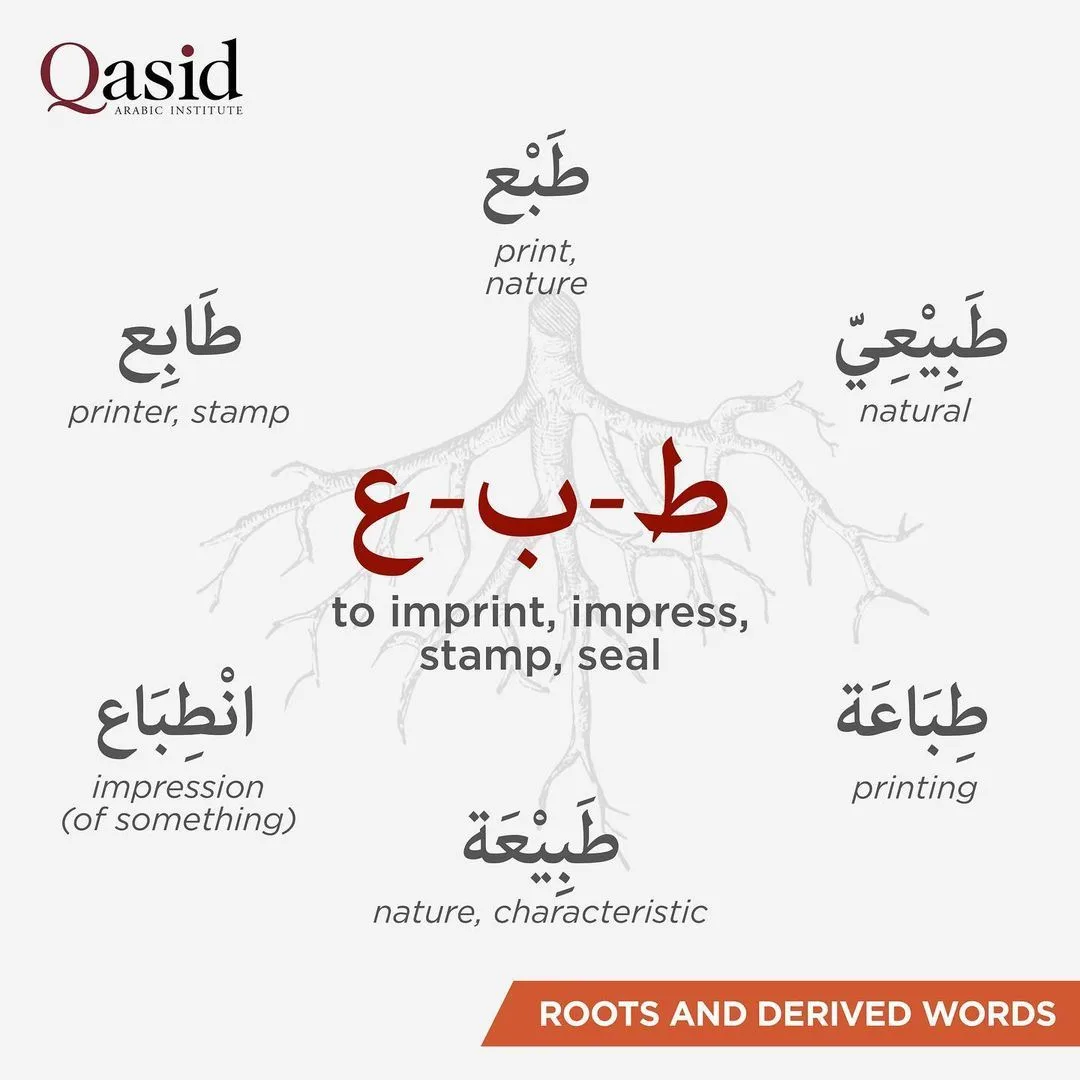
Arabic is written right to left in 28 letters that join together. Most words grow from a root of three consonants, so once you know a root you can recognise a whole family of words. This guide covers Modern Standard Arabic, the shared written form used across the Arab world.

ك ت بk-t-b · writing كَتَبَكِتابمَكْتَبكاتِب kataba · he wrotekitāb · bookmaktab · office, deskkātib · writer
The three root letters stay in the same order; the vowels and extra letters around them change the meaning.

One letter, four shapes

Arabic letters change shape depending on their position in a word, because they join to the letters beside them. Read from right to left.

ب Alone the letter bāʾ, “b”
بـ At the start joins to the left
ـبـ In the middle joins on both sides
ـب At the end joins to the right

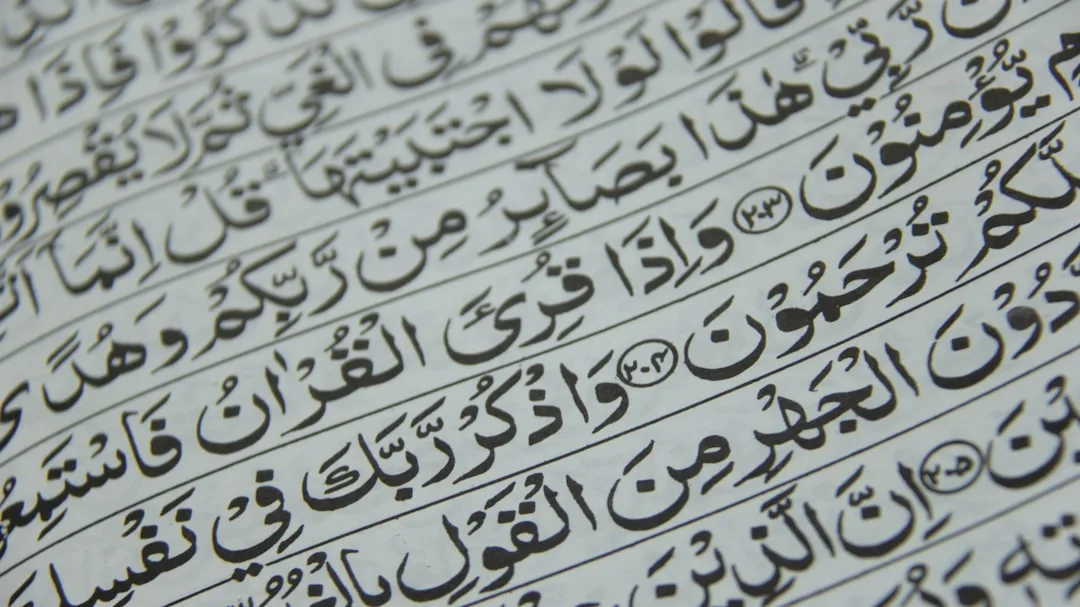
Short vowels (a, i, u) are usually not written; they appear as small marks only in learner texts, the Quran and children’s books.

“The”: sun letters and moon letters

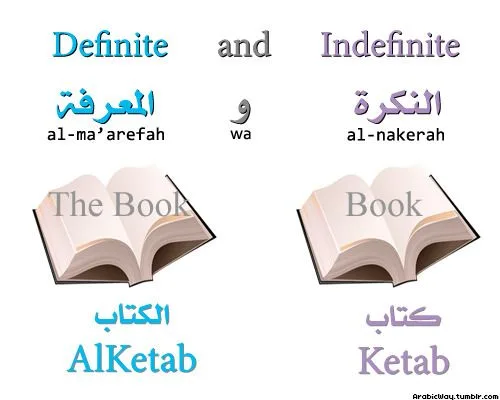
The Arabic word for “the” is ال al-, joined to the front of the noun. Before 14 “sun letters” the l sound blends into the next consonant; before the 14 “moon letters” it stays.

Sun letters: the l blends
الشَّمسash-shams“the sun” · ل + ش sounds “sh-sh”النُّورan-nūr“the light” · ل + ن sounds “n-n”
Moon letters: the l is pronounced
القَمَرal-qamar“the moon” · the l is clearالكِتابal-kitāb“the book” · the l is clear

Your first sentences

In the present tense Arabic needs no verb “to be”: “I student” is a complete sentence. Read the Arabic from right to left; the gloss under each word is in the same order.

أناanāIطالِبṭālibstudent
“I am a student.” No verb “am” and no word for “a”. A woman says طالِبة ṭāliba.
الكِتابal-kitābthe bookجَديدjadīdnew
“The book is new.” “The book” plus a describing word without “the” makes a full sentence.
كِتابkitābbook (of)الطّالِبaṭ-ṭālibthe student
“The student’s book.” This is iḍāfa: two nouns side by side mean “the book of the student”. Only the second takes al-.

Roots: one meaning, many words

Most Arabic words are built from a root of three consonants that carries a core meaning. Vowels and extra letters slot around the root to make related words. Learn the root once and you can often guess the meaning of words you have never seen. The hero diagram shows one root; the table below shows the other half of the system, the patterns. The root system reference has the main patterns.

ma-CCaCa place where it happensمَكْتَبmaktaboffice (k-t-b, writing)مَطْبَخmaṭbakhkitchen (ṭ-b-kh, cooking)
CāCiCa person who does itدَارِسdārisstudent (d-r-s, study)طَابِخṭābikhcook (ṭ-b-kh)
muCaCCiCa person who causes itمُدَرِّسmudarristeacher (d-r-s)مُعَلِّمmuʿallimteacher (ʿ-l-m, knowing)
maCCūCa thing it is done toمَكْتُوبmaktūbwritten, a letter (k-t-b)مَعْلُومmaʿlūmknown (ʿ-l-m)
Patterns are templates: C stands for a root consonant. Pour any root into ma-CCaC and you get a place, so the pattern alone tells you what kind of word it is.

Masculine and feminine

Every Arabic noun is either masculine or feminine (grammatical gender: the class a noun belongs to, which adjectives and verbs must match). Most feminine nouns end in ة, a letter called tāʾ marbūṭa, pronounced -a. Adjectives take the same ending to agree.

MeaningMasculineFeminineWhy
teacherمُعَلِّم muʿallimمُعَلِّمَة muʿallimaAdding ة makes the feminine form.
bigكَبِير kabīrكَبِيرَة kabīraAdjectives copy the noun’s gender.
new house / new carبَيْت جَدِيد bayt jadīdسَيَّارَة جَدِيدَة sayyāra jadīdaThe adjective comes after the noun and matches it.

One, two, many

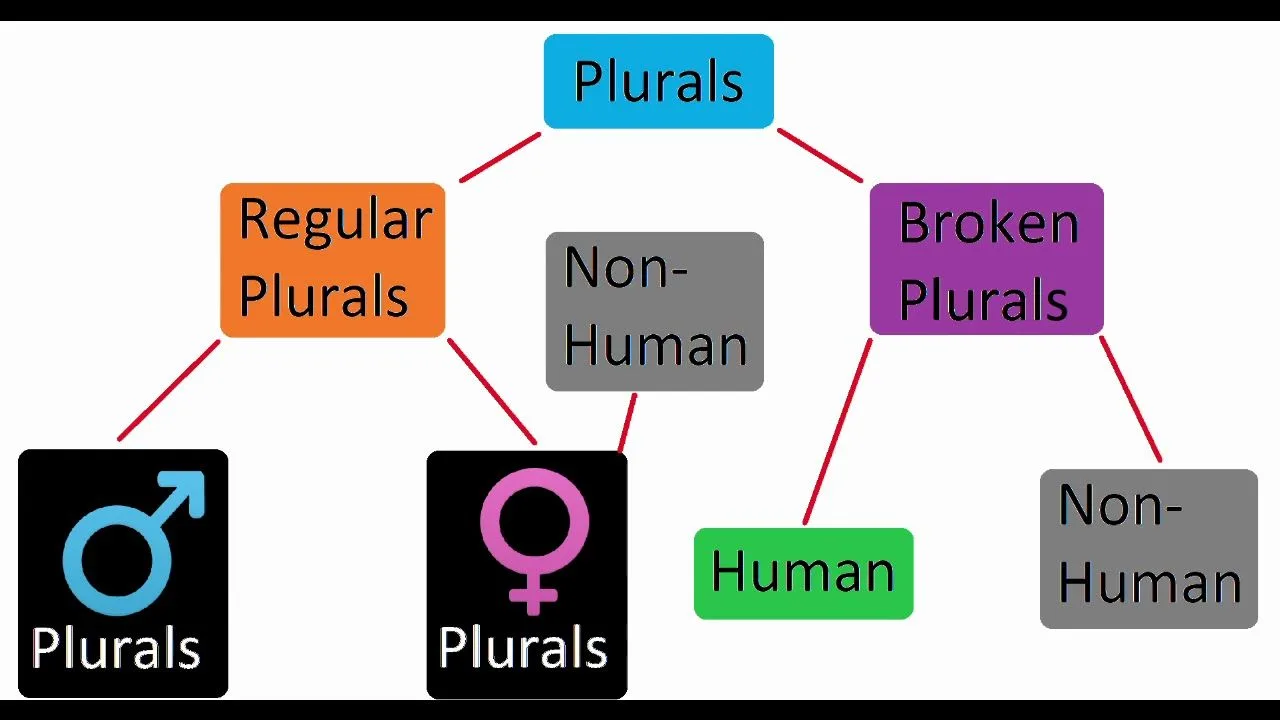
Arabic has three number forms: singular for one, dual for exactly two, and plural for three or more. Many plurals are “broken”: the vowels inside the word change instead of an ending being added. The broken plurals reference lists the common patterns.

FormExampleMeaningHow it is made
Singularكِتَاب kitābone bookThe basic word.
Dualكِتَابَان kitābāntwo booksAdd ـَان -ān.
Plural (broken)كُتُب kutubbooksThe vowels inside change.
Plural (sound)مُعَلِّمُون muʿallimūnteachersAdd ـُون -ūn (masculine).

A sentence with a verb

In formal written Arabic the verb often comes first. Its prefix or ending shows who is acting, so a separate word for “I” or “she” is often not needed.

أَكْتُبُaktubuI-writeرِسَالَةًrisālatana letter
“I am writing a letter.” The prefix أَ a- on the verb means “I”. Read from right to left; the gloss under each word follows the Arabic.
ذَهَبَتْdhahabatshe-wentإِلَىilātoالمَدْرَسَةal-madrasathe school
“She went to school.” The ending تْ -at on the verb means “she”. ال al- is “the”, joined to the noun.

How to start learning Arabic

  1. 1Learn the 28 lettersIn all their joined shapes, reading right to left. Two to three weeks is typical.
  2. 2Practise the new soundsع ʿayn, ح ḥāʾ and ق qāf have no English equivalent; drill them early.
  3. 3Choose Modern Standard and a dialectModern Standard Arabic is used in writing and news; a dialect such as Egyptian or Levantine is used at home and on the street.
  4. 4Learn words by rootGroup new words by their three-letter root to remember them in families.
  5. 5Read with vowel marksUse learner texts with the short-vowel marks until you can predict them yourself.

Guides on Arabic grammar and vocabulary

20 guides · newest first

Arabic Body Parts and Medical Vocabulary Reference
Arabic Body Parts and Medical Vocabulary ReferenceComplete Arabic body parts and medical vocabulary: head, limbs, internal organs, symptoms, doctor and hospital terms, medications, and pharmacy phrases.Apr 18, 2026 · 10 min read
Arabic Alphabet: Complete Beginners Guide
Arabic Alphabet: Complete Beginners GuideLearn all 28 Arabic letters with all 4 positional forms, unique Arabic sounds (ayn, ha, emphatics), harakat short vowels, sun and moon letters, and reading practice.Apr 18, 2026 · 13 min read
Arabic Definite Article Al: Sun and Moon Letters Reference
Arabic Definite Article Al: Sun and Moon Letters ReferenceComplete reference for the Arabic definite article al-: 14 sun letters (assimilation) vs 14 moon letters (no assimilation), pronunciation rules, and usage.Apr 18, 2026 · 7 min read
Arabic Grammar Rules: Essential Beginner's Guide
Arabic Grammar Rules: Essential Beginner's GuideMaster Arabic grammar fundamentals: VSO word order, masculine and feminine gender, broken plurals, definite article al-, dual form, and the root system with 30+ examples.Apr 18, 2026 · 11 min read
Arabic Broken Plurals: Comprehensive Patterns Reference
Arabic Broken Plurals: Comprehensive Patterns ReferenceComplete reference for Arabic broken plurals (جمع التكسير): 30+ patterns including فُعُول، أَفْعَال، فِعَال، فُعَلَاء، with examples and rules for predicting plural shapes.Apr 18, 2026 · 10 min read
Arabic Idafa Construction: Possession and Genitive Cases
Arabic Idafa Construction: Possession and Genitive CasesComplete reference for the Arabic iḍāfa construction: possession and 'of' relationships, muḍāf and muḍāf ilayh rules, case endings, and adjective placement.Apr 18, 2026 · 7 min read
Arabic Pronouns: Attached and Detached Complete Reference
Arabic Pronouns: Attached and Detached Complete ReferenceComplete Arabic pronoun reference: detached (انا, انت, هو) and attached (ـي, ـك, ـه) pronouns with full tables for verbs, nouns, prepositions, and reflexives.Apr 18, 2026 · 8 min read
Arabic Colors and Adjectives: Complete Reference
Arabic Colors and Adjectives: Complete ReferenceComplete Arabic color and adjective reference: the afʿal/faʿlā' color pattern, common descriptive adjectives, and full agreement rules (gender, number, definiteness, case).Apr 18, 2026 · 10 min read
Arabic Numbers: Complete Guide to the Number System
Arabic Numbers: Complete Guide to the Number SystemMaster Arabic numbers: Arabic-Indic numerals, number words 1-1000, the reverse gender agreement rule for 3-10, ordinal numbers, telling time - with Arabic script and transliteration.Apr 18, 2026 · 11 min read
Arabic Common Phrases: Essential Daily Expressions
Arabic Common Phrases: Essential Daily ExpressionsOver 100 essential Arabic phrases for daily conversation in Modern Standard Arabic with notes on Egyptian, Levantine, and Gulf dialect variations, transliteration, and usage.Apr 17, 2026 · 11 min read
Arabic Pronunciation Guide: Sounds for English Learners
Arabic Pronunciation Guide: Sounds for English LearnersMaster Arabic pronunciation: emphatic consonants (sad, dad, ta, dha), pharyngeal ayn and ha, uvulars ghayn kha qaf, long and short vowels, shadda gemination - 30+ examples.Apr 17, 2026 · 14 min read
Arabic Root System: Trilateral Roots and Word Formation
Arabic Root System: Trilateral Roots and Word FormationComplete reference to the Arabic root-pattern system: how trilateral roots generate families of words, k-t-b and s-l-m families, weak roots, and quadriliterals.Apr 17, 2026 · 8 min read
Arabic Days, Months, and Time Reference Guide
Arabic Days, Months, and Time Reference GuideComplete Arabic time reference: days of the week (number-based), Islamic Hijri and Gregorian calendars, telling time, today/tomorrow/yesterday, and prayer time vocabulary.Apr 17, 2026 · 10 min read
Arabic Verb Forms 1-10: Complete Conjugation Reference
Arabic Verb Forms 1-10: Complete Conjugation ReferenceComplete reference to the 10 Arabic verb forms (awzan): patterns, semantic shifts, past and present stems, verbal nouns, and examples for each form.Apr 17, 2026 · 8 min read
Comprehensive Arabic Verb Conjugation Guide
Comprehensive Arabic Verb Conjugation GuideLearn Arabic verb conjugation: all 13 forms for past and present tense, root-and-pattern system, hollow and defective verbs, negation - with Arabic script and transliteration.Apr 17, 2026 · 12 min read
Arabic Family and Relationships Vocabulary Reference
Arabic Family and Relationships Vocabulary ReferenceComplete Arabic family vocabulary: immediate and extended kin, cousin distinctions (ابن عم vs ابن خال), in-laws, and the cultural logic of Arab kinship terms.Apr 17, 2026 · 11 min read
Arabic Food Vocabulary: Restaurant and Cooking Guide
Arabic Food Vocabulary: Restaurant and Cooking GuideComplete Arabic food vocabulary: staple ingredients, meals, Middle Eastern dishes (hummus, falafel, kabsa, shawarma, mansaf), restaurant phrases, and halal terminology.Apr 17, 2026 · 11 min read
Arabic Top 100 Common Verbs Reference
Arabic Top 100 Common Verbs ReferenceThe 100 most common Arabic verbs organized by triliteral root: كان، قال، ذهب، جاء، رأى، أكل، شرب، كتب، قرأ and more, with past and present conjugation samples.Apr 17, 2026 · 11 min read
Essential Arabic Travel Phrases for Tourists
Essential Arabic Travel Phrases for TouristsEssential Arabic travel phrases for tourists: airport, hotel, taxi, directions, signs, and regional dialect variations across Egyptian, Gulf, and Levantine Arabic.Apr 17, 2026 · 10 min read
Complete Arabic Vocabulary for Weather and Nature
Complete Arabic Vocabulary for Weather and NatureComplete Arabic weather and nature vocabulary: seasons, temperatures, natural phenomena, geography across Arab climates (desert, Mediterranean, mountain), and ecological terms.Apr 16, 2026 · 11 min read