The Yoruba lexicon for the human body and for medicine is a meeting place of several distinct knowledge systems: traditional Yoruba anatomy with its philosophical and ritual layers, herbal medicine practiced for centuries before colonial contact, the Western biomedical vocabulary introduced through missionary hospitals and now dominant in cities, and the public-health vocabulary that has accreted around malaria, HIV, and more recently COVID-19.
The body part orí (head) is not merely an anatomical term in Yoruba culture; it is also the seat of personal destiny, an inner spiritual head (orí inú) that determines one's life trajectory. The vocabulary inevitably carries this metaphysical depth even when used in mundane contexts.
This reference catalogues body parts, internal organs, common ailments, symptoms, the language of pharmacy and hospitals, and the vocabulary of traditional Yoruba medicine (oogun ìbílẹ̀). It also covers practical phrases for medical encounters that visitors and learners need. For broader context on Yoruba culture and grammar, see the travel phrases reference and the orisha and Ifa religious vocabulary reference.
The Head and Face
The head holds particular significance in Yoruba philosophy. The phrase orí inú ("inner head") refers to a person's spiritual destiny, decided before birth.
| English | Yoruba |
|---|---|
| Head | Orí |
| Hair | Irun |
| Hair on head | Irun orí |
| Skull | Agbárí |
| Brain | Ọpọlọ |
| Forehead | Iwájú |
| Face | Ojú |
| Eye | Ojú |
| Eyebrow | Irun ojú |
| Eyelash | Ìpenpejú |
| Eyelid | Ìpàpọ̀ ojú |
| Nose | Imú |
| Ear | Etí |
| Mouth | Ẹnu |
| Lips | Ètè |
| Tongue | Ahọ́n |
| Tooth | Eyín |
| Gum | Erìgì |
| Cheek | Ẹ̀rẹ̀kẹ́ |
| Chin | Àgbọ̀n |
| Beard | Irùngbọ̀n |
| Mustache | Irun ètè |
| Neck | Ọrùn |
| Throat | Ọ̀fun |
The word ojú does double duty: it means both "eye" and "face" (and is even used for the front of objects, as in ojú ọ̀nà, "the face of the road" = "in front"). Context distinguishes the senses.
"Orí kì í burú lọ́jọ́ kan" - A head is not bad in a single day. Yoruba philosophy: destiny unfolds across a lifetime.
Torso and Limbs
| English | Yoruba |
|---|---|
| Body | Ara |
| Skin | Awọ |
| Shoulder | Èjìká |
| Chest | Igbáyà |
| Breast | Ọmú |
| Back | Ẹ̀yìn |
| Stomach / Belly | Ikùn / Inú |
| Navel | Ìdodo |
| Waist | Ẹ̀gbẹ́ |
| Hip | Ìbàdí |
| Buttocks | Ìdí |
| Arm | Apá |
| Hand | Ọwọ́ |
| Wrist | Ọrùn ọwọ́ |
| Palm | Àtẹ́lẹwọ́ |
| Finger | Ìka |
| Thumb | Àtàńpàkò |
| Fingernail | Ekànná |
| Leg | Ẹsẹ̀ |
| Thigh | Itan |
| Knee | Eékún |
| Ankle | Ọrùn ẹsẹ̀ |
| Foot | Ẹsẹ̀ |
| Heel | Gìgísẹ̀ |
| Toe | Ìka ẹsẹ̀ |
Note that ẹsẹ̀ covers both "leg" and "foot," much as English speakers loosely use "leg." For precision, itan (thigh) and gìgísẹ̀ (heel) help disambiguate.
The Yoruba word inú (inside / belly / interior) is also the seat of emotion and disposition. Inú dídùn ("sweet belly") means happy; inú bíbínú ("angry belly") means furious.
Internal Organs
| English | Yoruba |
|---|---|
| Heart | Ọkàn |
| Lungs | Ẹ̀dọ̀fóró |
| Liver | Ẹ̀dọ̀ |
| Kidney | Iwe |
| Stomach (organ) | Ikùn |
| Intestines | Ifun |
| Spleen | Ọ̀nà àyà |
| Bladder | Àpòitọ̀ |
| Bone | Egungun |
| Joint | Oríkèé |
| Muscle | Iṣan |
| Blood | Ẹ̀jẹ̀ |
| Vein | Iṣan ẹ̀jẹ̀ |
| Nerve | Iṣan ara |
The word ọkàn ("heart") in Yoruba is more than the muscular organ. It is the seat of inner conviction and faith, sometimes contrasted with inú (belly, the seat of emotion). To say someone is alaakan ("having a heart") often means courageous or determined.
Common Ailments and Symptoms
| English | Yoruba |
|---|---|
| Sickness / illness | Àìsàn / Àrùn |
| Fever | Ibà |
| Malaria | Ibà |
| Cold (illness) | Òtútù ara |
| Cough | Ìkọ́ |
| Headache | Orí ńfọ́ / Orífọ́ |
| Stomachache | Inú ríro |
| Toothache | Eyín ńdùn |
| Diarrhea | Ìgbẹ́ ńṣàn |
| Vomiting | Èébì |
| Nausea | Inú ríro |
| Pain | Ìrora / Ńdùn |
| Wound | Egbò |
| Scar | Àpá |
| Bruise | Ìbúgbé |
| Sneeze | Ààsùn |
| Chills | Ríringbà |
| Dizziness | Orí ríyán |
| Allergy | Àléèjì |
| Rash | Èérí ara |
The word ibà specifically refers to malaria, the dominant febrile illness in West Africa, but it is also generalized to mean "fever." When a Yoruba speaker says they have ibà, the default assumption (especially in rainy season) is malaria, and treatment is sought immediately.
"Àrùn tí kò bá ní orúkọ kì í wọn lójú" - A disease without a name does not bow before the eye. Yoruba medical wisdom: naming illness is the first step to healing.
Chronic Illnesses
| English | Yoruba |
|---|---|
| Diabetes | Àrùn àtọ̀gbẹ |
| High blood pressure | Ẹ̀jẹ̀ tó pọ̀ jù |
| Hypertension | Háì bíi pẹ́ẹ̀ṣọ̀ |
| HIV / AIDS | Àrùn èèdì |
| Tuberculosis | Ikọ́ fẹ́fẹ́ẹ̀ |
| Asthma | Ikọ́ fẹ́fẹ́ |
| Cancer | Jẹjẹrẹ |
| Stroke | Lúkùlúkù / Ìṣàlú |
| Epilepsy | Wárápá |
| Mental illness | Àìsàn àárẹ̀ ọkàn / Wèrè |
At the Hospital
| English | Yoruba |
|---|---|
| Hospital | Ilé ìwòsàn |
| Clinic | Ilé ìmọ́ǹtọ́sì |
| Doctor | Dókítà |
| Nurse | Nọ́ọ̀sì |
| Pharmacist | Onítòògùn |
| Patient | Aláàbá |
| Examination | Ìyẹ̀wò |
| Diagnosis | Ìdájọ́ àrùn |
| Treatment | Ìtọ́jú |
| Operation / surgery | Ìṣiṣẹ́ abẹ |
| Injection | Abẹ́rẹ́ |
| X-ray | Èkíìsà-rè |
| Laboratory | Ilé ìṣàwárí |
| Blood test | Ìyẹ̀wò ẹ̀jẹ̀ |
| Pregnancy | Oyún |
| Birth | Ìbí |
| Death | Ikú |
At the Pharmacy
| English | Yoruba |
|---|---|
| Pharmacy | Ilé òògùn |
| Medicine | Òògùn |
| Tablet / pill | Ọ̀gbọn òògùn |
| Capsule | Kápsùlì |
| Syrup | Ṣírọ́pù |
| Cream / ointment | Òrí òògùn |
| Antibiotic | Òògùn àìsàn |
| Painkiller | Òògùn ńdùn |
| Prescription | Ìwé òògùn |
| Side effect | Ìpalára òògùn |
| Dose | Ìwọ̀n |
| Three times a day | Lẹ́ẹmẹ́ta lójúmọ́ |
| With food | Pẹ̀lú oúnjẹ |
| Before bed | Kí o tó sùn |
Traditional Medicine
Yoruba traditional medicine, oogun ìbílẹ̀, has a vast vocabulary of plants, preparations, and ritual treatments. While modern healthcare dominates, traditional remedies remain important.
| English | Yoruba |
|---|---|
| Traditional medicine | Oogun ìbílẹ̀ |
| Herbalist | Onísègùn / Olóògùn |
| Diviner / priest | Bàbáláwo |
| Herb / leaf | Ewé |
| Root | Egbò |
| Bark | Èèpo igi |
| Charm / talisman | Òògùn / Ìṣẹ́ |
| Amulet | Ọ̀nà-ọwọ́ |
For deeper background on bàbáláwo and the broader spiritual context, see the Yoruba orisha and Ifa religious vocabulary reference.
"Eni tí ó ní àárẹ̀ kò ní oogun, sí ọ̀dọ̀ ọ̀bàbáláwo ló máa ń lọ" - One who has illness without medicine goes to the babalawo. The Yoruba health-seeking pluralism: biomedicine, herbal medicine, and divination coexist.
Useful Medical Phrases
| English | Yoruba |
|---|---|
| I am sick | Mo ń ṣàìsàn |
| I do not feel well | Ara mi kò yá |
| I have a headache | Orí mi ńfọ́ |
| I have a fever | Ibà ń pa mí |
| I am vomiting | Mò ń pọ̀sé |
| My stomach hurts | Inú mi ńdùn mí |
| I need a doctor | Mo nílò dókítà |
| Where is the hospital? | Níbo ni ilé ìwòsàn? |
| Do you have malaria medicine? | Ṣé ẹ ní òògùn ibà? |
| How much does this cost? | Èló ni èyí? |
| When should I take this? | Ìgbà wo ni mo lè mu èyí? |
| Twice a day | Lẹ́ẹ̀mejì lójúmọ́ |
| I am allergic to... | Ó ní àléèjì sí... |
| I am pregnant | Mo ń lóyún |
| Call my family | Pe ìdílé mi |
Body in Idioms and Proverbs
Yoruba metaphors locate emotions and traits in body parts.
| Idiom | Literal | Meaning |
|---|---|---|
| Ojú tì mí | "Eye is heavy on me" | I am ashamed |
| Ọkàn mi balẹ̀ | "My heart settled" | I am at peace |
| Inú mi dùn | "My belly is sweet" | I am happy |
| Inú ńbí mi | "Belly is angering me" | I am angry |
| Orí mi ńfọ́ | "My head is breaking" | I have a headache (literal); also "I am stressed" |
| Ọwọ́ mi gbóná | "My hand is hot" | I am eager / impatient |
| Etí lálá | "Sharp ears" | Attentive listener |
These idioms appear constantly in spoken Yoruba and are often used by doctors and healers as well as in everyday speech.
Common Mistakes Learners Make
Confusing ojú (eye) with ojú (face): They are the same word; context disambiguates. Phrases like ní ojú mi ("in my eye/face") can mean "in front of me" or "in my eyesight" depending on context.
Translating "I am sick" word-for-word: The natural construction is Mo ń ṣàìsàn ("I am being-sick") with the progressive marker ń, not a static "to be sick."
Using ibà for any fever: The word strongly implies malaria specifically. For a flu-like fever, ara mi gbóná ("my body is hot") is more neutral.
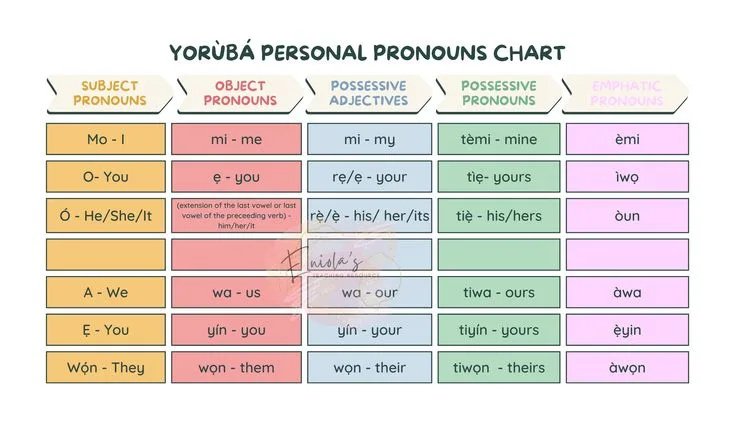
Forgetting body-part possessives: To say "my head" you say orí mi, with the possessive after the noun. See the Yoruba pronouns reference for full possessive paradigms.
Confusing inú (belly/inside) and ikùn (stomach as organ): Inú is the metaphorical interior; ikùn is the anatomical stomach. Saying inú mi ńdùn can mean "I have a stomachache" or "I am happy" depending on context, with dùn doubling as "ache" and "sweet."
Quick Reference
| Category | Key Terms |
|---|---|
| Head and face | Orí, Ojú, Imú, Etí, Ẹnu |
| Limbs | Apá, Ọwọ́, Ẹsẹ̀, Eékún |
| Organs | Ọkàn, Ẹ̀dọ̀, Ọpọlọ |
| Common illness | Ibà, Ìkọ́, Inú ríro |
| Hospital | Ilé ìwòsàn, Dókítà, Nọ́ọ̀sì |
| Medicine | Òògùn, Abẹ́rẹ́, Ọ̀gbọn |
| Pain | Ńdùn, Ìrora |
See Also
- Yoruba Travel Phrases for Tourists
- Yoruba Pronouns: Subject, Object, Possessive
- Yoruba Three Tones Reference
- Yoruba Orisha and Ifa Religious Vocabulary
- Yoruba Common Phrases for Daily Conversation
- Yoruba Top 100 Common Verbs Reference
- Yoruba Proverbs and Wisdom Sayings
Author: Kalenux Team
Frequently asked questions
Why does Yoruba use the same word for eye and face?
Yoruba metonymy collapses related concepts. Oju as face extends to front of, presence of, and various idiomatic locations. This is a common cross-linguistic pattern; many languages have polysemous body terms.
Is malaria really the default meaning of fever in Yoruba?
Yes, in West African contexts. Iba is so strongly associated with malaria that lay diagnosis often equates the two. Healthcare workers usually clarify with the symptom set.
How is traditional medicine viewed in modern Nigeria?
With pluralistic respect. Most Yoruba people use both biomedical and traditional treatments, often simultaneously. Educated elites may prefer hospitals, but herbal remedies for common ailments are widely respected.
What is the difference between dokita and babalawo?
Dokita is the Western-trained physician; babalawo is the Ifa diviner-priest who may also dispense herbal remedies and spiritual treatments. They occupy different but sometimes overlapping roles.
Can I learn body-part vocabulary without learning tones?
Not safely. Words like inu (interior) and inu with different tone are completely different in meaning. Tone marks are essential for any reliable Yoruba vocabulary work.
How do I describe pain location precisely?
Use the body-part name with the verb ndun meaning is paining: ori mi ndun mi means my head is paining me, eyin mi ndun mi means my tooth is paining me, and so on.
Are mental health terms taboo in Yoruba?
Some are. Were meaning madness is harsh and stigmatizing. Mental illness is increasingly discussed in clinical Yoruba using terms like aare opolo (brain fatigue or disorder), but social stigma remains.
What is the difference between dókítà and bàbáláwo?
Dókítà is the Western-trained physician; bàbáláwo is the Ifa diviner-priest who may also dispense herbal remedies and spiritual treatments. They occupy different but sometimes overlapping roles.