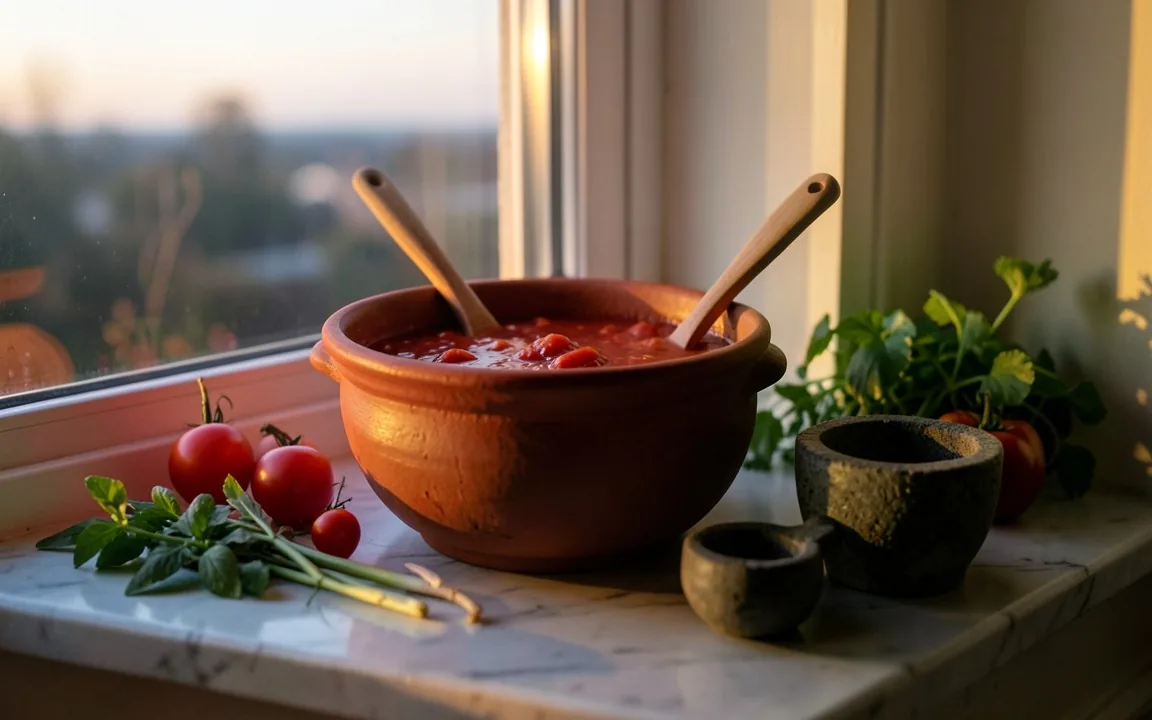
Yoruba cuisine is one of West Africa's richest culinary traditions, built around starchy pounded and fermented staples, richly spiced stews thickened with palm oil, assorted protein (beef, fish, goat, chicken, bush meat, snails), and a distinctive vegetable palette dominated by dark leafy greens and peppers.
For a learner of Yoruba, food vocabulary is among the most immediately rewarding areas of study: the language of food appears in markets, restaurants, television, domestic life, and ceremony, and a speaker who can name dishes, ingredients, and cooking actions operates comfortably in daily life. This reference presents the core food and cooking lexicon with proper Yoruba orthography and tone marks.
Yoruba food culture is also deeply communicative. Offering food (oúnjẹ) is an act of hospitality that cannot be refused lightly; even if one has already eaten, the polite move is to accept a little. Sharing from a common pot, eating with the right hand in traditional settings, and saluting those already eating with ẹ kú oúnjẹ are all woven into daily etiquette. Mastering food vocabulary therefore includes not only ingredient names but also the social framing of meals.
Many Yoruba food names have traveled far beyond Nigeria through the African diaspora. Àkàrà bean fritters reappear as acarajé in Bahia, Brazil, where Afro-Brazilian vendors still prepare them as a ritual food for Yoruba-derived deities. Ìyán and other West African staples inform the culinary culture of the Caribbean, particularly Haiti and Cuba. A Yoruba food vocabulary is therefore also a key to a wider diasporic food geography.
Staples and Starches
Yoruba meals are organized around a starchy base that accompanies a soup or stew. The base is either pounded (ìyán), fermented and rolled (ẹ̀bà, àmàlà), boiled as rice, or steamed as beans.
| Yoruba | English | Notes |
|---|---|---|
| ìyán | pounded yam | Soft, stretchy dough pounded from boiled yam; iconic celebratory food |
| ẹ̀bà | garri dough | Made from soaked dried cassava (garri); lighter than iyan |
| àmàlà | yam flour paste | Brown-black dough from dried yam flour; strongly associated with Ibadan |
| ìrẹsì | rice | Usually paired with stew or as jollof |
| iṣu | yam | The fresh tuber itself, either boiled or fried |
| ọkà | guinea corn paste | Fermented dough from sorghum flour |
| ẹ̀kọ | corn pudding | Firm cornmeal preparation, often wrapped in leaves |
| mọ́ín mọ́ín | steamed bean pudding | Black-eyed pea puree seasoned and steamed in leaves |
| iṣu síse | boiled yam | Plain boiled yam, often served with palm oil |
| iṣu dídín | fried yam | Deep-fried yam slices; common breakfast |
The pounded yam ritual. To pound ìyán traditionally, a peeled and boiled yam is placed in a deep wooden mortar (odó) and beaten with a long wooden pestle (ọmọ odó) until it reaches an elastic, smooth consistency. Today many households use electronic yam pounders, but the dish retains its ceremonial status. Pounded yam is almost always served with a meat-rich stew such as ẹfọ̀ riro or ẹ̀gúsí.
Soups and Stews
Soups, generically called ọbẹ̀, are the heart of the Yoruba meal. They are typically thick, vegetable-based, colored with palm oil (epo pupa), and enriched with a variety of protein.
| Yoruba | English | Character |
|---|---|---|
| ẹfọ̀ ríro | stirred spinach stew | Made with dark leafy greens, peppers, locust beans (ìrú), assorted meat |
| ẹ̀gúsí | melon seed soup | Thickened with ground melon seeds, leafy and meat-rich |
| ìlà | okra soup | Okra-based, sometimes called okro soup; viscous and savory |
| ẹwẹ́dú | jute leaves soup | Slippery mucilaginous soup made from jute leaves |
| ọbẹ̀ ata | pepper stew | The iconic red tomato-and-pepper base |
| ọbẹ̀ dúdú | black soup | Dark soup from bitter leaves and melegueta pepper |
| ìpẹ̀kẹ̀rẹ̀ | plantain and bean porridge | Slow-cooked savory dish |
| ọfàdà stew | ofada rice stew | Signature fermented-locust-bean pepper stew served with local rice |
| ọbẹ̀ ẹja | fish stew | Light or dark tomato stew with fish |
| obè ata-dín-dín | fried pepper stew | Pepper paste fried in palm oil, used as base |
The two soups a learner is most likely to encounter on any Yoruba menu are ẹfọ̀ riro and ẹ̀gúsí. Both are traditional, festive, and strongly identified with Yoruba cuisine. Ordering either in a Yoruba restaurant is a safe cultural choice.
Rice Dishes
| Yoruba | English | Notes |
|---|---|---|
| ìrẹsì jollof | jollof rice | Rice cooked in spiced tomato-pepper sauce; emblematic West African dish |
| ìrẹsì àti ọbẹ̀ | rice and stew | Plain white rice served with tomato-pepper stew |
| ìrẹsì ọfàdà | ofada rice | Short-grain local Yoruba rice with distinctive aroma |
| ìrẹsì àti ẹ̀wà | rice and beans | Rice served with stewed or fried beans |
| ìrẹsì dídín | fried rice | Nigerian-style fried rice with vegetables and curry |
| ìrẹsì àti ẹja | rice and fish | Rice with fried or stewed fish |
| jollof àti adìẹ | jollof and chicken | Classic party pairing |
Nigerian jollof rice is a point of national pride. The West African "jollof wars" (debates with Ghana and Senegal over which country makes the best version) are a staple of online banter. In Yoruba cuisine the rice is cooked in a deep tomato-pepper sauce with onions, bay leaves, curry, and thyme; it is often finished with a controlled burn on the bottom of the pot to produce the prized smoky crust.
Snacks and Street Foods
| Yoruba | English | Character |
|---|---|---|
| àkàrà | bean cake | Black-eyed pea fritters, fried in palm oil |
| ẹ̀kọ | corn pudding | Wrapped cornmeal, traditionally eaten with akara |
| púff-púff | fried dough balls | Sweet yeasted dough balls; Yoruba puff-puff |
| dòdò | fried plantain | Deep-fried ripe plantain slices |
| bóòlì | roasted plantain | Whole plantain roasted over coals |
| ipanla | cassava flakes | Crunchy cassava snack |
| chin-chin | fried pastry strips | Sweet fried dough squares |
| sùyà | spiced meat skewer | Though Hausa in origin, ubiquitous in Yoruba cities |
| kulikuli | peanut cakes | Hardened peanut cakes; Hausa loanword |
Àkàrà and ẹ̀kọ are a classic morning pairing. Akara fritters are sold from roadside pans in the early hours, still bubbling in palm oil. Buyers wrap them in newspaper or plastic and eat them with a chunk of wrapped corn pudding. The combination is high-protein, calorie-dense, and cheap, making it a breakfast for market traders, students, and office workers alike. The dish's endurance across continents (as acarajé in Brazil) testifies to its cultural weight.
Meat and Fish
| Yoruba | English |
|---|---|
| ẹran | meat (generic) |
| ẹran màlúù | beef |
| ẹran ẹwúrẹ́ | goat meat |
| ẹran àgùntàn | mutton |
| ẹran ẹlẹ́dẹ̀ | pork |
| adìẹ | chicken |
| pẹ́pẹ́yẹ | duck |
| ẹja | fish (generic) |
| ẹja tútù | fresh fish |
| ẹja gbígbẹ | dried fish |
| ẹja tínko | stockfish |
| kọ̀kọ̀ró | snails |
| ìgbín | large snails |
| abó | shrimp/prawn |
| àparò | guinea fowl |
| ọwọ̀ | bush meat |
Dried fish (ẹja gbígbẹ) and stockfish (ẹja tínko, imported from Norway) appear in nearly every traditional Yoruba soup. Their smoky depth is a signature of the cuisine.
Vegetables and Ingredients
| Yoruba | English |
|---|---|
| ata | pepper |
| ata rodo | scotch bonnet pepper |
| ata tàtàṣẹ | sweet red pepper |
| ewé | leaf (generic) |
| ewédú | jute leaves |
| ẹfọ̀ | green vegetable |
| ẹfọ̀ tẹ̀tẹ̀ | amaranth greens |
| ẹfọ̀ sókò | African spinach |
| ẹfọ̀ odù | bitterleaf |
| alùbọ́sà | onion |
| tòmátì | tomato |
| ẹ̀gúsí | melon seeds |
| ìrú | fermented locust beans |
| ẹpo pupa | red palm oil |
| epo àgbọn | coconut oil |
| iyọ̀ | salt |
| ṣúgà | sugar |
| òró | salt crystals (traditional) |
| ikàn | garden egg |
Ìrú (fermented locust beans) deserves special mention: this pungent dark fermented condiment is essential to traditional Yoruba soups, where a small knot of ìrú transforms the flavor. Once considered rustic and dismissed by some middle-class cooks, it has been firmly rehabilitated in modern Nigerian food discourse.
Drinks
| Yoruba | English |
|---|---|
| omi | water |
| omi tútù | cold water |
| omi gbígbóná | hot water |
| tii | tea |
| kọfí | coffee |
| wàrà | milk |
| ọtí | alcohol (generic) |
| ẹmu | palm wine |
| ọtí ṣẹ̀kẹ̀tẹ̀ | guinea corn beer |
| sóbò | hibiscus drink (zobo) |
| kunu | millet drink |
| omi ògòǹgò | coconut water |
| omí ìrin | pepper water |
Ẹmu (palm wine) holds particular cultural importance in Yoruba life: it is central to traditional marriage ceremonies where the bride formally presents a calabash of palm wine to her groom, and it figures prominently in Yoruba poetry and proverbs.
Cooking Verbs
| Yoruba | English |
|---|---|
| sè | to cook |
| dín | to fry |
| rò | to stir |
| yán | to pound |
| lọ̀ | to grind |
| bù | to cut |
| gé | to chop |
| fọ̀ | to wash |
| sun | to roast |
| hó | to boil |
| lọ́run | to peel |
| tán | to sieve |
| kó | to gather |
| ṣà | to pick over |
| gbọ́n | to shake |
| lùdì | to mix |
Restaurant and Market Phrases
| English | Yoruba |
|---|---|
| I would like to order | Mo fẹ́ paṣẹ |
| What do you have today? | Kí ni ẹ ní lónìí? |
| Do you have jollof rice? | Ṣé ẹ ní jollof? |
| I want pounded yam and egusi | Mo fẹ́ ìyán àti ẹ̀gúsí |
| Please make it less spicy | Jọ̀wọ́ má ṣe lọ́fọ́ jù |
| Can I have more meat? | Ṣé mo lè gba ẹran síi? |
| The soup is delicious | Ọbẹ̀ yìí dùn |
| How much is a plate? | Ẹ̀ló ni àwo kan? |
| Please bring water | Jọ̀wọ́ mú omi wá |
| Thank you, I have had enough | Ẹ ṣeun, mo ti jẹ tó |
| May I have the bill? | Ṣé mo lè rí iye owó? |
| Please pack it to go | Jọ̀wọ́ kó ó fún mi láti gbé lọ |
Meal Times and Eating Etiquette
| English | Yoruba |
|---|---|
| Breakfast | Oúnjẹ àárọ̀ |
| Lunch | Oúnjẹ ọ̀sán |
| Dinner | Oúnjẹ alẹ́ |
| Snack | Oúnjẹ kékeré |
| To eat | Jẹun |
| To drink | Mu |
| To be hungry | Ebi ń pa mi |
| To be thirsty | Òùngbẹ ń gbẹ mi |
| To be full | Mo ti yó |
| Bless the food | Jẹ́ kí oúnjẹ wà ní ìre |
The greeting ẹ kú oúnjẹ is offered to anyone already eating when one arrives; the response is ẹ sá á wá jẹun (please come and eat) or ẹ ṣeun. Accepting at least a token amount is the polite move in most traditional settings.
Eating with the hand. In traditional Yoruba settings, pounded yam and ẹ̀bà are eaten by hand from a communal bowl. A small ball of the starch is pinched off, dipped in the soup, and eaten directly. The right hand is always used. The left hand is traditionally unsuitable for eating or handing food, because it is associated with personal hygiene. Learners who share a Yoruba meal should observe this convention.
Famous Yoruba Dishes in Detail
Ìyán and Ẹ̀gúsí. Pounded yam served with melon-seed soup is the quintessential festive meal. The yam is boiled, pounded to smooth elasticity, and served as a mound beside a bowl of red-orange soup speckled with chunks of meat and fish.
Ẹ̀bà and Ẹfọ̀ ríro. Garri dough with spinach stew is an everyday combination: the cassava-based starch is cheap and filling, the stew packs greens and protein.
Jollof Rice with Chicken. The Nigerian wedding plate: a mound of tomato-red rice topped with a leg or breast of stewed chicken, with a side of fried plantain (dòdò) and a scoop of salad.
Ọfàdà Rice and Ayamase. Short-grain local Ọfàdà rice served with a fiery green-pepper stew flavored with fermented locust beans. A contemporary favorite in upscale Yoruba restaurants.
Àkàrà and Ọgi. Fried bean cakes with fermented corn pap, eaten for breakfast. A street-food classic.
Mọ́ín Mọ́ín. Steamed black-eyed pea pudding, often seasoned with pepper, onion, and fish or eggs. Served at ceremonies alongside jollof.
Common Mistakes
Confusing iṣu (yam) with ọ̀gẹ̀dẹ̀ (banana/plantain). These are entirely different foods; yams are the large tuber used for pounded yam, while plantain is the large banana cooked as dòdò.
Asking for "rice" expecting plain rice. In Yoruba context, ìrẹsì usually implies rice cooked as part of a dish. To specify plain white rice, say ìrẹsì funfun.
Declining food too directly. Flat refusal of offered food can register as cold. The graceful move is to accept a taste (mo máa gbà díẹ̀) even if one is not hungry.
Ordering ẹ̀bà and pounded yam interchangeably. Though similar in function, they are different staples with distinct textures and ingredients, and cooks are particular about the difference.
Mispronouncing dòdò. With two high tones, dòdò is fried plantain. Shifted tones produce entirely unrelated meanings. Tone mastery matters here as everywhere.
Quick Reference
Top Ten Dishes
- Ìyán (pounded yam)
- Ẹ̀bà (garri dough)
- Ẹfọ̀ ríro (spinach stew)
- Ẹ̀gúsí (melon seed soup)
- Jollof ìrẹsì (jollof rice)
- Àkàrà (bean cakes)
- Mọ́ín mọ́ín (steamed bean pudding)
- Dòdò (fried plantain)
- Àmàlà (yam flour paste)
- Ọbẹ̀ ata (pepper stew)
See Also
- Yoruba Alphabet and Pronunciation Complete Guide
- Yoruba Three Tones High Mid Low Complete Reference
- Yoruba Noun System No Plurals No Gender Reference
- Yoruba Greetings and Cultural Salutations Reference
- Yoruba Proverbs Wisdom Sayings Cultural Reference
- Yoruba Diaspora Varieties Brazil Cuba Reference
- Yoruba Loanwords English Hausa Portuguese Reference
Author: Kalenux Team
Frequently asked questions
What is the most iconic Yoruba dish?
Pounded yam (iyan) with egusi or efo riro is the dish most strongly associated with Yoruba cuisine. It is the centerpiece of weddings, funerals, naming ceremonies, and festive meals. Ordering it in a traditional Yoruba restaurant is the safe cultural choice for a visitor seeking an authentic experience.
Is Yoruba food very spicy?
Yes, most traditional stews rely on scotch bonnet peppers (ata rodo) for their signature heat. Pepper soup, jollof rice, and all stew-based dishes run hot by default. Travelers with low spice tolerance should ask cooks to reduce the pepper with the phrase ma se lofo ju (not too peppery).
Are there vegetarian Yoruba dishes?
Traditional Yoruba cooking is meat-heavy, but plant-based options exist: moin moin, akara, plantain dishes, and many soups can be prepared without meat or with only fish. Ofada rice with a simple pepper stew and ewedu soup are commonly prepared in vegetarian-friendly versions by request.
What is iru and why is it important?
Iru is fermented locust beans, a dark pungent condiment used as a flavor base in traditional Yoruba soups. Its umami depth is essential to the taste profile of many stews, including efo riro and egusi. A small knot of iru transforms a soup from good to classical, and it is considered a signature of traditional cooking.
How did Yoruba food spread to the Americas?
Enslaved Yoruba people brought their culinary repertoire to Brazil, Cuba, Haiti, and other parts of the Caribbean. Akara survived as acaraje in Bahia, where it remains a ritual food for Afro-Brazilian religious practice. Yoruba-derived religions preserved food offerings to orishas with African ingredients, names, and forms.
What drink is essential to Yoruba celebration?
Palm wine (emu) is central to traditional marriage ceremonies and ritual events, and is still widely consumed in rural areas. In the classical Yoruba wedding, the bride presents a calabash of palm wine to her groom as a symbol of acceptance. Modern urban celebrations more often feature beer, stout, and soft drinks.
Can I find Yoruba food outside Nigeria?
Yes. Major diaspora centers (London, New York, Houston, Atlanta, Toronto) have Nigerian restaurants and groceries where Yoruba dishes are served and essential ingredients like iru, melon seeds, palm oil, and dried fish are available. Frozen pounded yam flour and fresh yam tubers are now widely stocked in African supermarkets abroad.
What is ìrú and why is it important?
Iru is fermented locust beans, a dark pungent condiment used as a flavor base in traditional Yoruba soups. Its umami depth is essential to the taste profile of many stews.